

The US Federal Reserve on Wednesday voted 9-3 to hold its benchmark interest rate steady at a target range of 3.50% to 3.75%, extending a pause that has been in place since January despite mounting pressure from some policymakers to raise rates further to combat persistent inflation. The decision, announced following the two-day Federal Open Market Committee meeting, keeps borrowing costs unchanged even as price pressures remain well above the Fed’s long-standing 2% target.
Three regional Fed presidents dissented in favor of a quarter-point rate increase: Beth M. Hammack of the Cleveland Fed, Neel Kashkari of the Minneapolis Fed, and Lorie K. Logan of the Dallas Fed. Their dissent reflects a growing divide within the central bank over how aggressively to respond to inflation that has overshot the Fed’s target for an extended period.
Warsh’s Inflation Warning
The rate decision comes amid heightened scrutiny of the Fed’s inflation-fighting credibility, with prominent critics including Kevin Warsh publicly warning that persistently elevated inflation risks becoming entrenched if the central bank does not act more decisively. Warsh has argued that the Fed’s continued overshoot of its 2% target for multiple years threatens to undermine public confidence in its commitment to price stability.
Market Reaction and September Outlook
Financial markets showed a mixed reaction to the Fed’s decision, with investors weighing the divided vote against forward guidance signaling a data-dependent approach for coming meetings. Traders have priced in a moderate probability of a rate hike at the September meeting should inflation data continue to run hot, though the Fed’s official statement stopped short of committing to any specific future action.
Crude Oil and Mideast Tensions Add Pressure
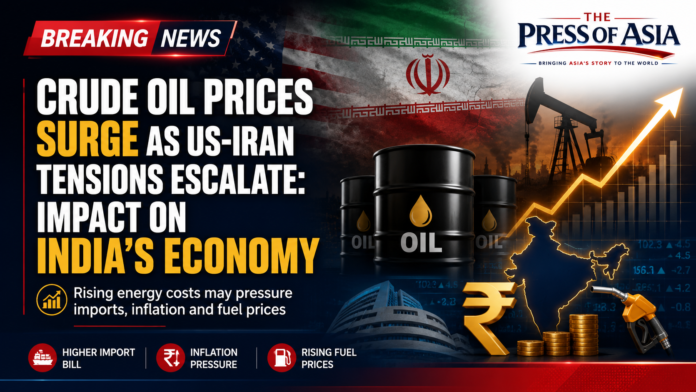
The Fed’s inflation concerns have been compounded by elevated crude oil prices linked to ongoing tensions in the Middle East, including the conflict involving Iran, which has kept energy costs volatile and added upward pressure on headline inflation readings. Policymakers acknowledged that geopolitical risk remains a key factor complicating the path back to the 2% target.
Impact on India
For India, the Fed’s decision to hold rates steady offers some near-term relief for capital flows and the rupee, as a widening gap between US and Indian interest rates can otherwise trigger outflows from emerging markets. However, elevated crude oil prices driven by Middle East tensions pose a direct risk to India’s import bill and could add to domestic inflationary pressure, given the country’s heavy reliance on oil imports.
Why It Matters
The divided FOMC vote underscores the difficulty central banks face in balancing growth support against inflation control amid ongoing geopolitical shocks. The outcome of the September meeting will be closely watched as a signal of whether the Fed shifts toward a more hawkish stance if inflation data fails to improve.
Sources: Federal Reserve FOMC statement (July 29, 2026), Reuters, The New York Times, CNBC, Fox Business.