
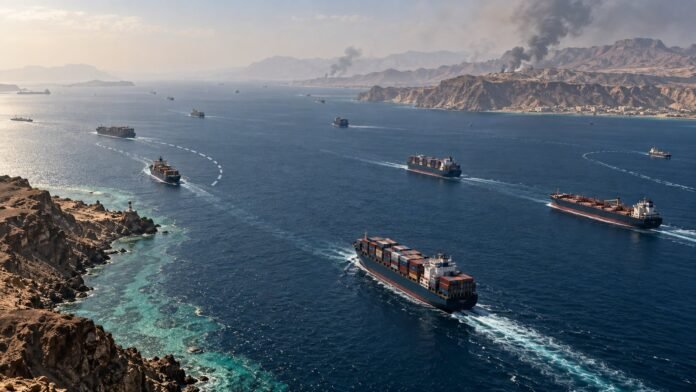

ADEN, September 14, 2026: Yemen fighting has intensified along the Red Sea coast as internationally recognised government forces moved against Iran-backed Houthi positions and the Houthis claimed new attacks inside Saudi Arabia. The escalation has deepened humanitarian pressure and renewed concern over shipping near the Bab el-Mandeb strait.
Government-aligned forces said they would deploy additional troops after the Houthis captured the port of Mokha and an island positioned near the entrance to the narrow waterway. Bab el-Mandeb connects the Red Sea with the Gulf of Aden and is a critical route for cargo and energy shipments moving between Asia, Europe and the Middle East.
Saudi border areas face renewed attacks
Air-raid sirens sounded in the Saudi cities of Abha and Khamis Mushait as the Houthis claimed drone and missile operations. The group did not provide evidence for all of its claims. Saudi authorities separately blamed a projectile from Yemen for injuries to two people and damage to a mosque and nearby buildings close to the border.
The renewed cross-border fire is significant because a truce that began in 2022 had largely reduced major fighting. The latest exchanges raise the risk that a conflict already linked to wider regional tensions could again pull neighbouring states into more direct confrontation.
Displacement rises as front lines move
The United Nations estimates that more than 80,000 people have been displaced since the beginning of September. Families are leaving areas affected by shelling, disrupted services and fear that fighting will spread. Aid agencies already face funding shortages and difficult access across a country weakened by years of war.
Government-linked National Resistance forces said more than 500 of their fighters and more than 1,000 Houthi combatants had been killed over four weeks. Those figures were claims by a party to the conflict and could not be independently verified. Civilian harm and displacement remain the most reliable measure of the crisis’s immediate human cost.
Why the Red Sea route matters
- Bab el-Mandeb is a gateway for container traffic and energy shipments using the Suez Canal route.
- Higher security risks can increase insurance, fuel and freight costs.
- Longer diversions around southern Africa delay deliveries and add pressure to supply chains.
- A wider confrontation could affect oil markets far beyond Yemen.
Diplomatic pressure will now centre on preventing further attacks on civilians, protecting commercial navigation and restoring a political track. Any claims from combatants should be treated cautiously until independently verified, while humanitarian agencies need safe access to newly displaced communities.
Source: Associated Press. Follow our World coverage for verified updates.