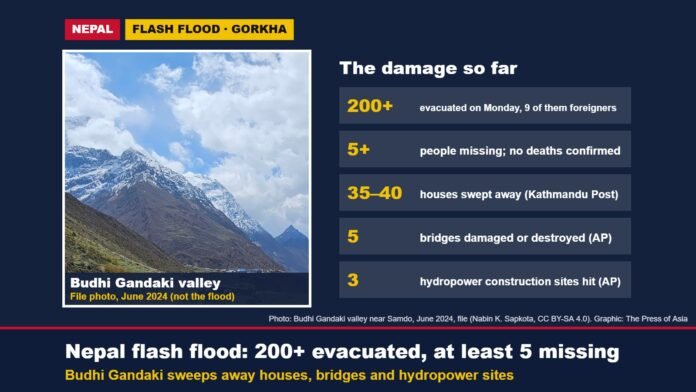
October 12: Nepal’s army evacuated more than 200 people, including nine foreigners, on Monday from villages in Gorkha district cut off by a flash flood on the Budhi Gandaki river, and at least five people are missing, the Associated Press reported. The flood struck on Sunday after a landslide appears to have blocked the river upstream, sweeping away dozens of houses, several bridges and construction sites at hydropower projects, The Kathmandu Post reported. No deaths have been confirmed.
Key highlights
- About 35 to 40 houses were swept away in Jagat Bagar, Salleri and Ghattikhola in Chumnubri rural municipality, The Kathmandu Post said; AP said dozens of houses and farms were damaged or destroyed.
- Bridges lost include suspension bridges at Nyakchet–Sirdibas and Machhakhola–Kerauja, a motorable iron bridge at Soti and the Aarughat bridge linking Gorkha and Dhading districts.
- The flood swept away a construction camp and equipment at the 341 MW Budhi Gandaki hydropower project; AP said construction sites for three hydropower plants were hit.
- Officials said an early warning let most people reach higher ground. Helicopter flights stopped on Monday afternoon because of high winds and were due to resume on Tuesday, AP reported.
- Authorities warned of a very high flood risk downstream along the Trishuli corridor as far as Benighat, and told people near Mugling, Chitwan and Nawalparasi to stay alert.
The damage so far
| What | Detail | Source |
|---|---|---|
| Missing | At least five; earlier reports said four people in a shed at Chumchet plus four to five herders out of contact | AP; The Kathmandu Post |
| Deaths | None confirmed | AP |
| Houses | About 35–40 swept away; 20–22 more at risk in Salleri | The Kathmandu Post |
| Bridges | Five damaged or destroyed, including the Aarughat bridge between Gorkha and Dhading | AP; The Kathmandu Post |
| Hydropower | Construction sites of three plants hit, including the 341 MW Budhi Gandaki project camp | AP; The Kathmandu Post |
| Evacuated | More than 200 on Monday, including nine foreigners; six rescued by army helicopter on Sunday | AP; The Kathmandu Post |
| Likely cause | A landslide near Chumchet that blocked the river and then gave way; not officially confirmed | The Kathmandu Post; AP |
Where the water goes
| River stretch | Places named in the alert | Why it matters |
|---|---|---|
| Budhi Gandaki | Jagat, Salleri, Machhakhola, Soti, Aarughat (Gorkha) | Where the flood struck; popular with trekkers on the Manaslu route |
| Trishuli | Benighat | The Budhi Gandaki joins the Trishuli; authorities warned of very high flood risk to Benighat |
| Lower Trishuli and Narayani | Mugling, Chitwan, Nawalparasi | Residents told to stay alert; the Narayani continues into India as the Gandak |
The area is popular with hikers and tourists on the Manaslu trek, AP noted, which is why foreigners were among those evacuated. The Gorkha district’s chief administrator, Dharmendra Kumar Mishra, said helicopters would keep supplying villages that have been cut off.
What to watch
- The search for the missing once helicopter flights resume on Tuesday.
- Whether the downstream alert along the Trishuli and Narayani is lifted.
- Damage assessments at the hydropower sites, including the 341 MW Budhi Gandaki project.
- Road repairs to reconnect cut-off villages.
What it means
The early warning appears to have saved lives, and that is the main lesson so far: most people reached high ground before the water arrived. But the flood shows a risk Nepal’s mountain valleys face again and again: landslides that dam a river, then release a surge of water on the villages, bridges and hydropower projects below. With several large hydropower plants planned or under construction along these rivers, the stakes of such events are growing.
Sources
- AP, via News4Jax: Nepal rescuers reach flood-hit villages as at least 5 people reported missing
- The Kathmandu Post: Five things to know about the Budhi Gandaki flash flood

The International Desk covers world and Asian affairs, diplomacy and conflict, with a focus on what they mean for India. Stories are checked against at least two credible sources before publication.