Historical profile and explainer | Information checked through October 16, 2026
Abhijeet Dipke became widely known through the Cockroach Janta Party, a movement whose unusual name made it instantly recognisable. Understanding his emergence, however, requires more than following a viral slogan. His story connects an earlier career in political communication, postgraduate education in the United States, a controversy involving India’s Chief Justice, and successive campaigns over education and electoral accountability.
This account follows the available public record. It distinguishes university confirmation from biographical reporting, political allegations from established events, and announced campaigns from independently demonstrated results. It is a history of his documented public activities, not a claim to reconstruct private conversations or an entire personal life.
1. His background: what can be established
Contemporary profiles identify Dipke with Aurangabad, now Chhatrapati Sambhajinagar, in Maharashtra. They describe undergraduate journalism studies in Pune and subsequent postgraduate education in public relations in Boston. The Times of India reported these details in its July 23 profile. It described him as 30 at that time; that reported age should not be converted into an exact birth date without supporting records. Source: Times of India profile
There is stronger institutional evidence for his Boston education. Boston University’s College of Communication published an interview with him on June 8, 2026, identifying him as a public-relations master’s graduate who had completed the programme the previous year. That places completion in 2025, unlike some media descriptions suggesting he had only recently finished in 2026. Source: Boston University
The sources reviewed do not provide a sufficiently verified basis for a detailed account of his family finances, childhood experiences or private relationships. Filling those gaps with plausible anecdotes would make the profile less reliable.
2. Before CJP: experience in political communication
Dipke did not arrive in public campaigning without previous political experience. Mint’s May 19 profile reported that he had volunteered with the Aam Aadmi Party’s social-media operation and participated in digital campaigning around the 2020 Delhi Assembly election. It also described his return to Maharashtra while preparing applications for postgraduate study abroad. Source: Mint’s early profile
Moneycontrol’s July profile similarly connected his earlier work with AAP to social-media strategy and election communication. Reports differ on the precise end year of that association, so a definitive employment timeline would require additional documentation. Source: Moneycontrol
This background helps explain familiarity with short political messages, online audiences and campaign presentation. It does not establish that a previous party directed every later initiative.
The relevant distinction is between experience and control. A history of volunteering is evidence of an association. Proof of organisational control would require something more specific, such as decision-making records, financial arrangements or documented instructions.
3. May 2026: the controversy behind the name
CJP’s immediate origin was the controversy surrounding Chief Justice of India Surya Kant’s courtroom language in May 2026. Dipke launched the satirical platform on May 16. NDTV’s contemporary profile recorded the launch and the rapid attention that followed. Source: NDTV’s May profile
A fair account must include the Chief Justice’s clarification. In a statement reported by PTI, he said his criticism concerned people entering professions with fake or bogus qualifications, and rejected the suggestion that he had criticised India’s youth generally. The clarification followed reporting that had interpreted the remarks more broadly. Source: PTI report carried by NDTV
Two parts of the history therefore need to remain visible: the interpretation that prompted the protest identity, and the speaker’s stated explanation of what he meant.
It would be misleading to remove the clarification and repeat the broadest interpretation as an uncontested quotation. Equally, the clarification does not erase the fact that the controversy became the movement’s founding reference point.
4. Why the satirical identity travelled
Dipke’s early online invitation used deliberately self-mocking language about unemployment and constant internet use. Mint reported that a sign-up form accompanied the launch. Instead of rejecting the insulting label, the campaign adopted it as a collective identity. Source: Mint
The communication mechanism is straightforward: a surprising name invites curiosity, a recognisable symbol makes the campaign easy to reproduce, and a simple invitation lowers the threshold for participation. This is an interpretation of the campaign’s design, not evidence that every follower shared the same political beliefs.
Contemporary reports described very large online audiences, but their figures were snapshots taken on different dates. Followers, form submissions, active volunteers and physical participants are different measures.
A historical profile should therefore resist treating any one social-media number as an audited membership count, a vote share or a representative survey of Indian youth. Online reach demonstrates attention; it does not automatically demonstrate durable organisation.
5. The role of training and artificial intelligence
In Boston University’s interview, Dipke connected his campaign methods to lessons about clear objectives, consistent visual presentation and understanding an audience. He also said artificial-intelligence tools helped him create designs and website templates quickly when he lacked a large team. He distinguished those production tasks from the human judgement required for politically sensitive messaging. Source: Boston University interview
That account offers a more concrete explanation than assuming that rapid production must imply a large hidden operation. It remains his account of his own methods, not an independently audited statement of every resource used.
The broader lesson is that modern communication tools can reduce the cost of launching a recognisable campaign. They cannot, by themselves, establish public trust, verify allegations or organise sustained participation.
For readers assessing Dipke, the useful question is whether a message is supported by evidence. Professional presentation neither proves a claim nor disproves it.
6. June: moving from an online campaign to a physical protest
By early June, the campaign had moved towards education-related demands, including accountability over examination irregularities. In a June 3 report based on a conversation with Dipke in Boston, The Indian Express described his planned return to Delhi and a proposed peaceful sit-in at Jantar Mantar on June 6. Sonam Wangchuk publicly expressed support. Source: Indian Express, June 3
Associated Press subsequently reported supporters gathering in Delhi on June 6, marking the movement’s transition into street protest. A separate AP report documented a campaign event in Pune on June 11. Sources: AP on June 6, AP on June 11
This transition mattered because attending a demonstration requires more commitment than following an account. It also introduced responsibilities involving permissions, participant safety, logistics and clearly communicated demands.
The early street campaign established that CJP was no longer operating exclusively through satire. How extensive its local organisation had become remained a separate question.
7. The X-account dispute: the complete sequence matters
CJP also became involved in litigation over restrictions on its X account. On May 29, the Delhi High Court declined to order immediate restoration and directed consideration through the relevant review process, according to contemporary legal reporting. Source: The New Indian Express
The later outcome was different. The July 7 order in Abhijeet Dipke v. Union of India and Another directed revocation of the blocking order. The text records the government’s concern relating to NEET-related messaging and the court’s conclusion that the stated primary concern no longer survived after the examination. Source: July 7 court order reproduced by Indian Kanoon
This is a useful example of why historical reporting must follow proceedings beyond an initial hearing. Reporting only May’s refusal would omit the later relief.
The July decision should also be read within its scope. Restoring an account does not amount to judicial certification of every political claim posted through it.
8. July: education protests became a national confrontation
By July, Dipke’s campaigning centred on demands for Education Minister Dharmendra Pradhan’s resignation and reform of the examination system.
Business Today reported that Dipke undertook a hunger strike and ended it on July 20 after Union Minister J. P. Nadda met a CJP delegation and received its memorandum. Source: Business Today, July 23
The confrontation also produced competing accounts of police action. In a July 18 interview, Dipke accused the authorities of suppressing peaceful protest after Wangchuk was removed from the protest site. The same Indian Express report carried the police explanation that his hospitalisation followed medical advice and court directions. Source: Indian Express, July 18
Those accounts should remain attributed. An organiser’s allegation of unlawful conduct is not automatically a judicial finding; an official explanation should also remain open to scrutiny against records and evidence.
This phase turned Dipke into a visible negotiating and speaking figure within a wider agitation.
9. July 25: the resignation and the limits of claiming victory
The Indian Express reported Pradhan’s resignation on July 25 and Dipke’s public celebration at the protest site. The resignation had been a central demand of the campaign, making it a significant political outcome for the organisers. Source: Indian Express, July 25
A careful history can recognise that outcome without describing one individual as the sole cause of a government decision. Students, fellow organisers, other public figures, negotiations and the underlying examination controversy formed part of the setting.
The article also reported Dipke discouraging supporters from turning him into a personal hero. That statement is relevant to how he publicly presented his leadership, but it does not independently establish how decisions were shared within the organisation.
The longer-term test was what followed the resignation. Changing a minister and changing examination administration are separate outcomes; durable reform requires rules, implementation and measurable improvements.
10. August: school conditions entered the campaign
The campaign subsequently expanded into scrutiny of government-school infrastructure. On August 24, The Indian Express reported that Dipke had written to state education ministers seeking information about school conditions, following a proposed citizen-led school audit around Independence Day. Source: Indian Express on the school campaign
The requests covered repairs, teaching vacancies, budget allocations and expenditure, access to schools, teachers’ additional duties and basic facilities.
This represented a different form of accountability from demanding a resignation: asking institutions to disclose information that can be checked against conditions on the ground.
The distinction between publicity and results remains essential. A filmed visit can identify a problem at a particular school; it cannot establish a nationwide rate of failure without a suitable method and wider data.
Likewise, announcing an audit does not prove that repairs were completed. Follow-up reporting would need responses from authorities, dates, expenditure records and verification at the schools concerned.
11. October: electoral accountability and renewed detention
By October, CJP was participating in protests seeking Chief Election Commissioner Gyanesh Kumar’s resignation over disputed voter-roll revision. AP reported that Dipke, Saurav Das and Ashutosh Ranka were detained after arriving in Delhi on October 10 and released the following day. Its report also recorded that the BJP and Election Commission denied manipulation allegations. Source: AP, October 11
On October 16, The Tribune reported Dipke’s detention while leaving for the proposed Tiranga march in Connaught Place. Times of India separately described the police notice citing restrictions and the absence of permission for the proposed gathering, while reporting Dipke’s defence of peaceful protest. Sources: Tribune’s October 16 coverage, police notice and response
Detention does not establish guilt. Equally, a protest demand does not establish that its underlying allegation has been proved. His later custody status must be checked separately from these dated reports.
12. His relationship with established Opposition parties
Dipke’s earlier AAP association and later contacts with Opposition figures have generated questions about CJP’s independence.
An October 15 Indian Express report described Congress attempts to invite him and CJP representatives to an Opposition gathering. It also reported scepticism within Congress about CJP’s relationship with AAP. These were reported political assessments and outreach efforts, not proof that one party controlled another organisation. Source: Indian Express on Congress outreach
There are several different relationships that should not be collapsed into one: sharing a stage, supporting a particular demand, receiving an invitation, negotiating cooperation and entering a formal alliance.
A useful account asks which of those occurred and what records support it. Assuming a secret arrangement from a photograph is weak evidence; describing every contact as irrelevant would also overlook ordinary political relationship-building.
13. Funding: what is known, claimed and still unverified
The material reviewed for this profile does not establish a complete, independently verified donor list or audited account of CJP’s income and expenditure. It would therefore be irresponsible to name a financier as established fact.
In July, allegations of foreign support prompted a question at an External Affairs Ministry briefing. Dynamite News reported the spokesperson as saying the ministry had “no information to share”. That response should not be converted into either confirmation of foreign funding or a comprehensive financial clearance. Source: Dynamite News, July 24
Separately, Dipke said he was willing to disclose education-loan and scholarship documents amid questions about his foreign studies. That concerns his stated education financing; it does not establish the funding of an entire movement. Source: Indian Express, August 3
A firmer funding investigation would require authenticated accounts, donor disclosures, spending records and responses from the organisation. Overseas study, political disagreement or online popularity is not a substitute for that evidence.
14. How his public role should be assessed
The record supports describing Dipke as a political communicator who founded a satirical platform and became a prominent organiser in successive public campaigns.
It does not justify claiming access to his private intentions or diagnosing his personality from speeches. Criticism should address particular statements, tactics, organisational decisions and outcomes.
Three questions offer a more useful assessment. Are factual claims corrected when evidence changes? Are finances and decision-making sufficiently transparent? Do campaigns produce verifiable improvements beyond attention and confrontation?
These standards apply equally to supporters and critics. A popular leader still requires scrutiny, while an unpopular campaign should not be dismissed through invented biographical claims.
Conclusion: an unfolding history
Dipke’s documented trajectory runs from political communication and public-relations education to the May 2026 launch of CJP, education protests, litigation over online restrictions, a school-information campaign and October demonstrations.
The most defensible conclusion is that he helped create a recognisable vehicle for public dissatisfaction and moved it beyond an internet joke. How lasting that vehicle becomes remains an open question.
A complete historical account must stay open to new records. It should acknowledge political outcomes, preserve official counter-positions and identify unresolved questions without filling them with suspicion or admiration. That is how a profile remains useful after the immediate controversy has passed.
Image credit
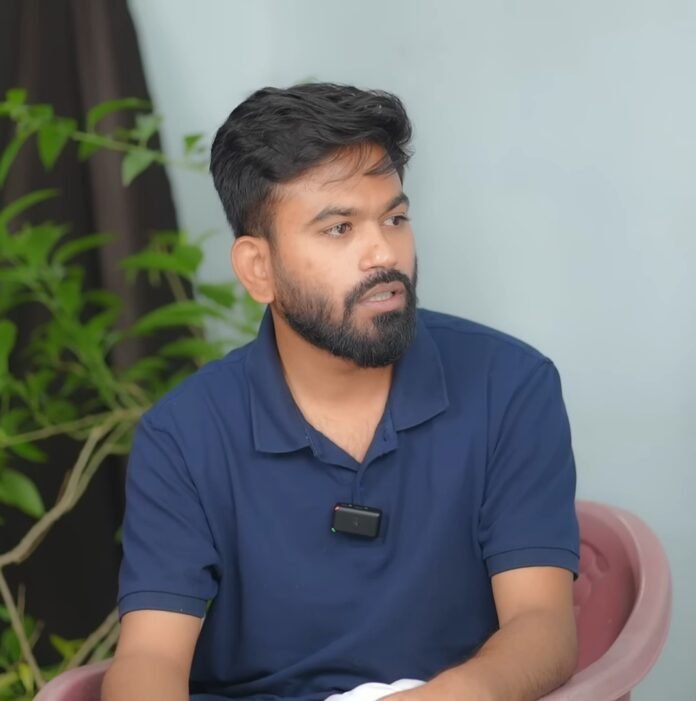
Abhijeet Dipke during a LetsUpp Marathi interview on August 13, 2026. Screenshot: LetsUpp Marathi, via Wikimedia Commons, licensed under CC BY 4.0. Cropped/resized for thumbnail display. This is a file interview image, not a photograph of the October 16 detention.

The History Desk tells the stories behind the news: the people, events and turning points of India, Asia and the world, with timelines and original sources. Stories are checked against at least two credible sources before publication.