October 24: North Korean leader Kim Jong Un visited the Chinese border city of Dandong on Saturday and was accompanied by senior Chinese official Wang Huning, China’s state news agency Xinhua confirmed. The trip puts a newly opened cross-border bridge and economic cooperation in focus, while later official reporting clarifies an important detail that differed from early accounts of who would meet Kim.
Key highlights
- Xinhua identified Wang Huning as Kim’s host in Dandong.
- The new Yalu River crossing connects Dandong with North Korea’s Sinuiju.
- Early reports naming Premier Li Qiang should not be treated as the final account of Saturday’s meeting.
- A visit is not confirmation of a new trade agreement or a US–North Korea summit.
What the official account confirms
Xinhua’s report, issued at 7 p.m. China time, said Wang accompanied Kim in Dandong, Liaoning province. Wang is a member of the Communist Party’s Politburo Standing Committee and chairs the Chinese People’s Political Consultative Conference. The agency said he conveyed greetings from President Xi Jinping. This is confirmation from China’s official account of the visit, rather than an independent assessment of its political success.
Yonhap’s later report, citing Xinhua, described Kim returning across the new Amnok bridge after the meeting. It also reported a visit to a car factory and statements in favour of wider economic and commercial cooperation. No contract value or industrial agreement is established by those descriptions. The South China Morning Post independently reported the visit and identified Wang as Kim’s host in its evening coverage.
Why the identity of the host matters
An early AFP report cited South Korean government sources and media accounts that described Kim arriving in Dandong. It relayed a report that Li Qiang had greeted him. At that stage, AFP said it had sought Chinese confirmation, and Seoul had not confirmed the itinerary. The subsequent Xinhua account names Wang. Those are different stages of reporting, and the early account should not be silently presented as settled fact.
For readers following a fast-moving diplomatic story, the practical distinction is between a source’s initial indication, an official confirmation and evidence of an agreement. One does not automatically supply the others. We have used the later official identification for the headline, while retaining the discrepancy here so that readers can understand why earlier headlines elsewhere may name a different Chinese official.
The bridge brings trade into the picture
AFP reported that the New Yalu River Bridge had formally opened the previous week after a long delay. Its account described a four-lane crossing completed in 2014 but held back by connecting-road and customs-facility issues on the North Korean side. China is North Korea’s largest trading partner, making the location commercially important as well as symbolic.
| Issue | Established point | Still to watch |
|---|---|---|
| Meeting | Xinhua names Wang Huning as Kim’s host. | Any further official account of decisions. |
| Transport link | The new crossing links the Dandong–Sinuiju border area. | Actual cargo flows and customs arrangements. |
| Industrial visit | Later reporting describes a car-factory tour. | Whether a specific project or contract is announced. |
| Wider diplomacy | The trip precedes next month’s APEC gathering in China. | A separately confirmed summit invitation or schedule. |
What this does—and does not—signal
Our assessment is that the venue allows Beijing and Pyongyang to present practical cooperation alongside their political relationship. A functioning border crossing can make trade easier, but a ceremonial visit cannot tell us how much freight will use it, which goods will move or how quickly business activity will increase. Those questions require operational information and subsequent trade data.
AP’s report also places the visit in Kim’s effort to strengthen ties with China and Russia. That is a wider diplomatic context, not proof that Saturday produced a new military arrangement. Nor does the timing ahead of APEC establish that Kim will meet US President Donald Trump. Any such meeting needs its own confirmation from the relevant parties.
What to watch
The next useful evidence would be detailed Chinese and North Korean readouts, announcements naming specific economic projects and information on the bridge’s regular operations. Readers should distinguish those documents from speculation about the visit’s hidden purpose. The confirmed news on Saturday evening is the Dandong visit with Wang; claims about undisclosed deals go beyond the public record reviewed here.
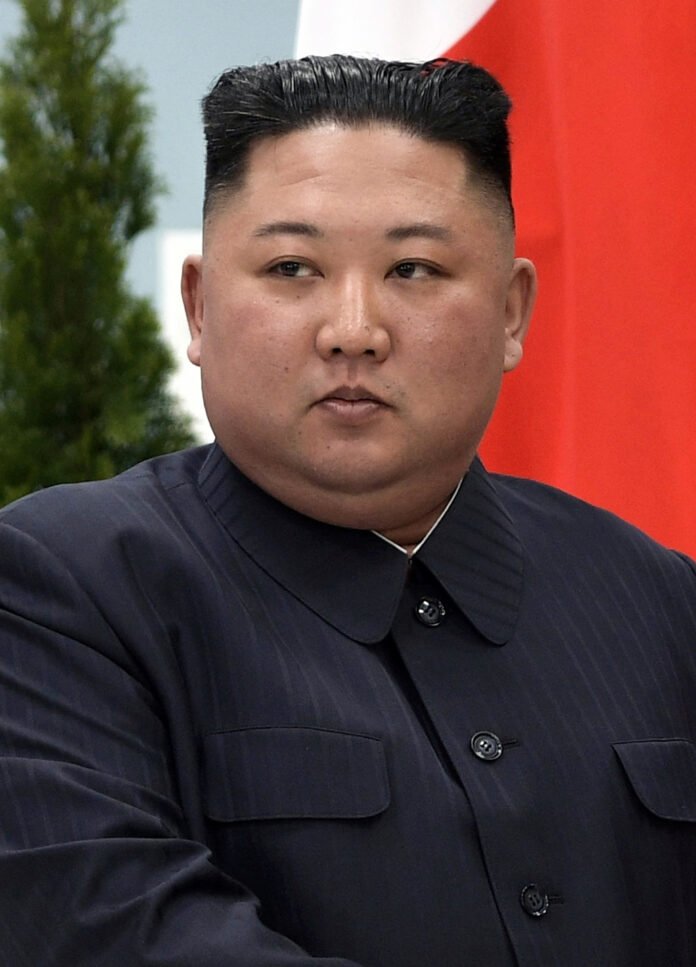
File photo: Kim Jong Un in Russia on April 25, 2019, not during the Dandong visit. Photo: Alexei Nikolsky / Presidential Press and Information Office, www.kremlin.ru, via Wikimedia Commons; CC BY 4.0. Cropped portrait. Source · Licence
Sources
- Xinhua: China’s top political advisor accompanies DPRK top leader on visit to border city
- Yonhap: Kim leaves Dandong accompanied by Wang Huning, according to Xinhua
- South China Morning Post: North Korean leader Kim Jong-un visits Chinese border city of Dandong
- AFP: North Korea’s Kim makes unannounced visit to Chinese border city
- Associated Press: North Korean leader Kim Jong Un visits China to inaugurate a new cross-border bridge

The International Desk covers world and Asian affairs, diplomacy and conflict, with a focus on what they mean for India. Stories are checked against at least two credible sources before publication.