October 24: Vietnam has ordered urgent measures to secure electricity supplies for 2027–2030, placing rooftop solar, battery storage, delayed projects and demand management on the government’s immediate agenda. The Government Office’s public register identifies the instruction as Dispatch 10790/VPCP-CN, issued on October 22. Vietnam News Agency reported the operational priorities on Friday.
Key highlights
- The directive addresses electricity supply from 2027 through 2030 and beyond.
- Rooftop solar and battery storage are part of the response, alongside generation and grid projects.
- An October 30 deadline applies to key proposals, according to VNA.
- Government instructions are not proof that new capacity has already entered service.
The immediate priorities
VNA reported that Prime Minister Le Minh Hung instructed ministries and local authorities to prevent shortages and accelerate implementation. The report described a push for self-consumed rooftop solar at homes, offices, public buildings and businesses, with battery energy storage encouraged to reduce peak demand. It said the industry ministry must propose local installation targets and operating deadlines before October 30.
The same report said Vietnam Electricity, known as EVN, was tasked with studying battery systems at substations and other suitable sites for operation in 2027. It also described work on solar and grid projects already included in the revised Power Development Plan VIII. These are implementation instructions and target dates, not a list of systems that were commissioned on the day the dispatch was issued.
Why the factory sector is watching
A Reuters analysis dated October 23, reproduced by Coal Zoom, reported that Vietnam’s coal-fired generation reached 132.9 terawatt-hours in the first nine months of 2026, 15% above the same period a year earlier, citing Ember data. It connected stronger electricity demand with the country’s export-oriented manufacturing expansion and a decline in hydropower output.
The analysis reported that hydro production was about 12% lower over that period and that coal supplied nearly 52% of generation. Those figures describe the recent power mix; they do not measure the effect of a directive issued this week. A future increase in solar or storage could change operations, but its actual contribution must be established with later generation and grid data.
Vietnam Factory Data’s October 23 industry brief separately cited EVN’s nine-month coal output at approximately 132.91 billion kilowatt-hours. That is broadly consistent in scale with the Reuters figure: a billion kilowatt-hours equals a terawatt-hour. The brief urged manufacturers to consider reliability and energy-related supply-chain requirements rather than assuming an export order is independent of the electricity used to fulfil it.
The implementation checklist
| Workstream | What the reporting describes | How to judge progress |
|---|---|---|
| Rooftop solar | Local targets and support arrangements for self-consumption. | Published rules, installations and metered output. |
| Battery storage | EVN studies and systems targeted for 2027. | Procurement, connection and operating records. |
| Generation and grids | Review of projects and implementation responsibilities. | Construction milestones and commissioning. |
| Demand management | Electricity saving and peak-load reduction measures. | Measured demand reduction rather than announced ambition. |
Our reading is that the dispatch combines two different tasks: increasing available supply and making demand easier to manage. Solar panels generate electricity when sunlight is available; a storage system shifts some electricity to another time, while a transmission project moves power to where it is needed. Calling all three simply “new power capacity” obscures their different roles.
What businesses should not infer
A national instruction does not tell a factory its future tariff, connection date or uninterrupted-service guarantee. Businesses need the relevant utility’s site-specific information and any applicable programme conditions. The report does not establish a universal cash subsidy for every household or industrial rooftop installation, so readers should not treat it as an application notice.
The distinction also matters for carbon claims. A factory’s own rooftop installation and the average grid mix are different quantities. The presence of new solar policy does not make all Vietnamese production renewable-powered. Claims about cleaner manufacturing need to identify the electricity actually used and the basis on which its emissions are counted.
What to watch
The next milestones are the October 30 proposals, subsequent local support rules and concrete progress on storage and grid connections. Readers should watch for named project owners, financing and completion dates. The directive raises the political priority of electricity security; the test will be whether projects and demand measures arrive when factories and households need them.
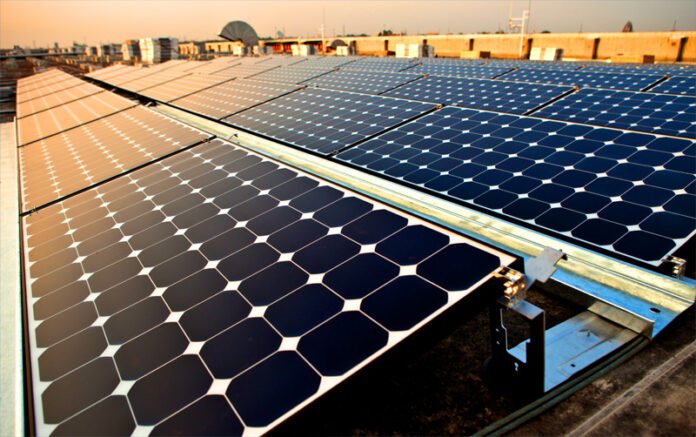
File photo: Intel’s solar installation in Vietnam, September 2013. Photo: Intel Free Press / Wikimedia Commons, CC BY 2.0. This does not show a project newly announced under the October 2026 directive. Source · Licence
Sources
- Vietnam Government Office: Dispatch 10790/VPCP-CN on electricity supply for 2027–2030
- Vietnam News Agency: PM orders urgent measures to ensure power supply for 2027–2030
- Reuters via Coal Zoom: US tariff war is fueling Vietnam’s coal boom
- Vietnam Factory Data: Coal-fired power supplies about half of Vietnam’s electricity

The Business Desk covers markets, the economy, companies and personal finance. Stories are checked against at least two credible sources before publication.