October 26: China’s ruling Communist Party enters the scheduled October 26–29 window for its fifth Central Committee plenum in Beijing, with party governance at the centre of the announced agenda. The September scheduling announcement and an independent Brookings research commentary both identify the four-day meeting. Neither a pre-meeting agenda nor an analyst’s forecast establishes what the gathering will ultimately decide.
Key highlights
- The announced meeting dates are October 26–29 in Beijing.
- A draft decision on rigorous party self-governance is due for deliberation.
- Independent researchers see political significance ahead of the next party congress.
- The final communiqué, rather than predictions, will establish the outcome.
What the official announcement establishes
The September 21 leadership meeting, chaired by Xi Jinping, set the dates and agreed to send a draft governance decision to the plenum. The official account, republished on Henan’s government website, says an earlier draft had been circulated for comment among party members and non-party figures.
The account emphasises central leadership, discipline and systems for supervising the party. Those are the stated priorities of the leadership; they should not be presented as independently measured improvements in governance. A document submitted for deliberation also remains distinct from a final adopted decision.
Why researchers are watching the meeting
In their October 23 Brookings commentary, Jonathan A. Czin and Allie Matthias describe the closed-door plenum as an occasion for signalling policy directions. They argue that the gathering also matters for personnel arrangements ahead of the expected 2027 party congress.
That is attributed political analysis, not a result announced by the committee. The researchers discuss possible leadership and military personnel changes, but this report does not turn those possibilities into confirmed appointments, removals or attendance figures.
| Document or statement | What it can establish |
|---|---|
| September scheduling announcement | Dates and proposed subject of deliberation |
| Research commentary | An attributed interpretation of political significance |
| Final communiqué | Decisions officially announced after deliberation |
| Implementation documents | How a decision is translated into specific measures |
How to read the outcome
For an international reader, the useful question is what changes between the proposal and the final text. Does the committee announce a new procedure, identify an implementing institution or set a timetable? General language alone cannot establish those details.
The same approach applies to personnel. A verified appointment requires a named person, position and authoritative announcement. Absence from a photograph or speculation before a closed-door meeting is insufficient evidence of a formal change.
Businesses following China should separate political direction from operational regulation. A party document can signal priorities, while a particular compliance obligation still needs its own applicable rule. This article does not claim that the meeting has already changed tariffs, investment restrictions or consumer policy.
What to watch
The next substantive evidence will be the meeting’s official communiqué and any accompanying decision. Compare the adopted wording with the September proposal and identify concrete provisions rather than assuming that a broad slogan automatically represents a new measure.
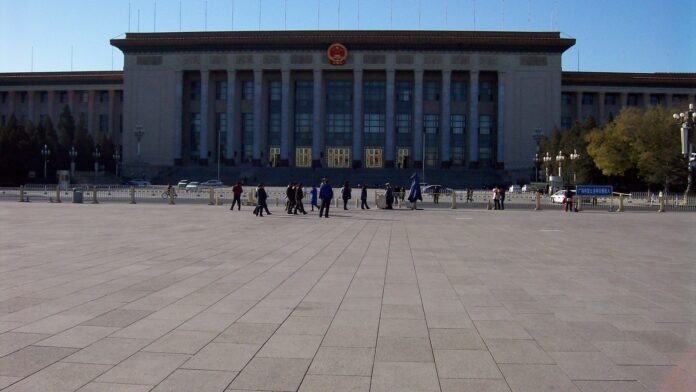
This is an agenda and context report prepared during the opening-day window. It does not claim access to the closed-door proceedings. The archival Great Hall photograph illustrates Beijing’s political institutions; it is not evidence of the venue or attendance of this particular session.
File photo: Great Hall of the People in Beijing, January 5, 2006. Photo: Philip Nalangan / Wikimedia Commons, CC BY 4.0. Cropped and resized; not a photograph of the current event. Photo source; CC BY 4.0.
Sources
- Henan government: Official leadership meeting account and plenum dates
- Brookings: Xi’s party — what to look for at the upcoming plenum

The International Desk covers world and Asian affairs, diplomacy and conflict, with a focus on what they mean for India. Stories are checked against at least two credible sources before publication.