October 26: A vaccine trial targeting Bundibugyo virus has begun in the Democratic Republic of the Congo, with the first participant vaccinated in Bunia on October 23. The research programme also includes preparations for a candidate developed by the University of Oxford with Serum Institute of India. That candidate’s planned participation should not be confused with an approved vaccine or a completed efficacy result.
Key highlights
- Tumaini is an adaptive Phase 2/3 vaccine trial.
- The first vaccination took place on October 23, according to the trial announcement.
- CEPI says an Oxford–Serum Institute candidate is being prepared for entry.
- WHO says there is currently no approved vaccine specifically against Bundibugyo virus disease.
What the trial announcement confirms
CEPI’s October 23 account identifies Ervebo as the first candidate entering the trial. It says preparations are underway for additional CEPI-funded candidates from Moderna and from Oxford with Serum Institute of India. Those are different stages: the first participant’s vaccination does not mean every planned candidate has already been administered.
The announcement describes an adaptive platform intended to evaluate multiple candidates, with safety, immune response and efficacy among the research questions. It gives the study registration number NCT07842107 and identifies Congolese national oversight and international research partners.
| Term | What it establishes |
|---|---|
| Trial start | Participants have begun receiving an intervention under a study protocol |
| Candidate preparation | A product is being prepared for possible study entry |
| Efficacy result | Data show how the intervention performed under the study design |
| Regulatory approval | An authority has authorised a defined use; trial entry alone is insufficient |
Why a licensed Ebola vaccine still needs study here
WHO’s October 23 outbreak update says no approved vaccine or specific treatment currently exists for Bundibugyo virus disease. Its account separately confirms the launch of Tumaini and the enrolment of initial participants.
The distinction matters because Ebola disease can be caused by different virus species. CEPI says Ervebo is licensed against Ebola virus, while the present study evaluates candidates against Bundibugyo virus. An existing licence for one target should not be represented as proof of protection against another.
What Phase 2/3 means for a reader
The US National Institutes of Health explains that clinical trials evaluate interventions through planned research phases. Safety, effectiveness and the collection of evidence are central purposes. A study protocol defines the question, eligible participants, procedures and information to be gathered.
In an adaptive platform, the research framework can accommodate multiple candidates. That can make outbreak research more flexible, but it does not remove the need for appropriate oversight, reliable comparison and analysis before conclusions are drawn.
The meaningful next milestone is therefore evidence from the study, not simply a larger list of partners. A later report should specify which candidate was evaluated, the participants included, the outcome measured and the uncertainty around the estimate.
The India connection and its limits
Serum Institute of India’s link is through the Oxford candidate named in the CEPI announcement. This report does not claim that the product has been approved in India, that a public vaccination campaign has begun or that doses are available for ordinary travel use.
International research participation and domestic availability are separate questions. Manufacturing preparation, study authorisation and a decision to make a vaccine available each require their own documentation.
What to watch next
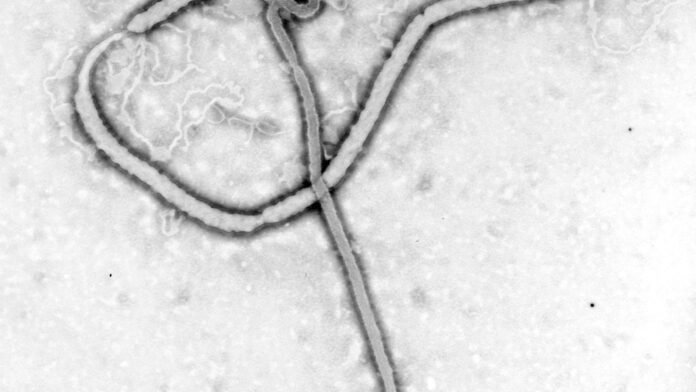
Watch for formally announced entry of additional candidates, protocol updates and published safety and efficacy findings. The current milestone is the start of a study designed to answer unresolved questions. The archival CDC micrograph is representational: it is not an image of the trial vaccine or a Bundibugyo sample from the 2026 outbreak.
File photo: an archival electron micrograph of an Ebola viral particle; not a Bundibugyo sample from the 2026 outbreak, 1976. Photo: CDC / Dr. Frederick A. Murphy / Wikimedia Commons, Public domain — U.S. federal government. Cropped and resized; not a photograph of the current event. Photo source; Public domain — U.S. federal government.
Sources
- CEPI: First participant vaccinated in the Tumaini trial
- WHO: October 23 Bundibugyo outbreak update and trial launch
- ClinicalTrials.gov: Tumaini study registration
- NIH: Clinical-trial phases, protocols and research evidence

The Tech Desk covers technology, artificial intelligence and cybersecurity. Stories are checked against at least two credible sources before publication.