VIENNA, November 3: Seven OPEC+ producers led by Saudi Arabia and Russia have decided to keep their crude output targets for December unchanged at September 2026 levels, the OPEC Secretariat said after a virtual meeting on November 1. The decision means no extra barrels from the group next month, even as oil prices remain high because of the conflict in the Middle East — a key concern for Asian importers such as India, China, Japan and South Korea.
Key highlights
- Saudi Arabia, Russia, Iraq, Kuwait, Kazakhstan, Algeria and Oman agreed to maintain September 2026 required production for December 2026.
- These are the OPEC+ countries that announced additional voluntary output cuts in April and November 2023.
- They reaffirmed their commitment to full conformity with the OPEC+ Declaration of Cooperation.
- The group will meet again on November 29 and keep meeting monthly.
- Official data from South Korea show Dubai crude averaged $110.7 a barrel in October, up 70.4% from a year earlier.
What OPEC+ decided
The Secretariat’s statement said the seven countries reviewed current global market conditions and outlook before deciding to hold December production at the September required levels. It did not announce new increases or cuts, and it did not mention compensation plans for past overproduction. The detailed production table for each country was published with the statement.
| Item | Detail |
|---|---|
| Meeting | Virtual, November 1, 2026 |
| Countries | Saudi Arabia, Russia, Iraq, Kuwait, Kazakhstan, Algeria, Oman |
| Decision | Maintain September 2026 required production for December 2026 |
| Next meeting | November 29, 2026 |
| Frequency | Monthly reviews of market conditions |
Why prices matter for Asia
Asia is the largest destination for Gulf and Russian crude, so OPEC+ supply decisions feed directly into fuel prices, inflation and trade balances across the region. South Korea’s October trade data show the effect: crude import volumes fell 6.3% from a year earlier, but the import bill rose 51.9% to $10.7 billion because the unit price was up 62.0%. In Australia, the central bank cited higher fuel and commodity prices linked to the Middle East conflict when it raised interest rates on November 3.
Our calculation
- A year ago: a 70.4% rise to $110.7 implies Dubai crude averaged about $65 a barrel in October 2025.
- Price, not volume: in Korea’s case, paying 51.9% more for 6.3% less crude shows almost all of the higher bill comes from price.
- Four weeks to the next decision: with the next meeting on November 29, December supply is now fixed; January is the next month that can change.
What it means
By holding output steady, OPEC+ is choosing not to add supply into a tight, conflict-affected market. For oil-importing Asian economies, that means little immediate relief at the pump or in import bills. India, which imports most of the crude it refines, is exposed through fuel prices, the rupee and inflation; the same pressure is visible in Pakistan’s rising fuel and LPG prices and in South Korea’s transport inflation.
What to watch
- The November 29 OPEC+ meeting and any change to January targets.
- The course of the Middle East conflict and shipping through the Strait of Hormuz.
- Monthly fuel and LPG price revisions in India and other Asian importers.
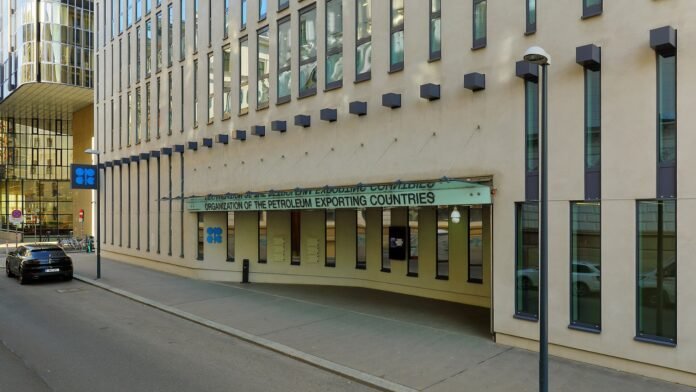
File photo: entrance to the OPEC Secretariat headquarters in Vienna. Image: C.Stadler/Bwag, CC BY-SA 4.0, via Wikimedia Commons. Photo source · Licence
Sources
- OPEC: Press release on the meeting of seven OPEC+ countries, November 1, 2026
- Korea Policy Briefing: October 2026 export-import trends, trade ministry (oil price and crude import data, Korean)

The Business Desk covers markets, the economy, companies and personal finance. Stories are checked against at least two credible sources before publication.