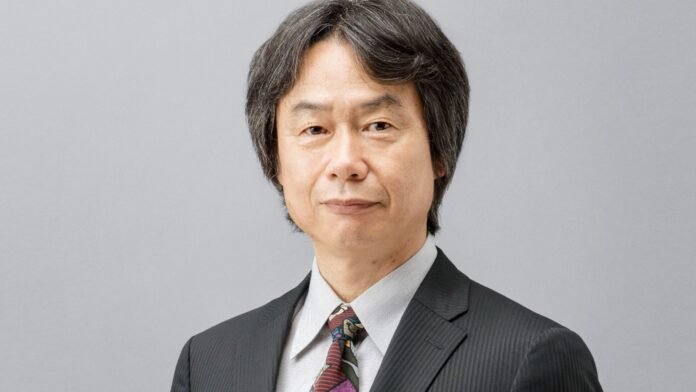
TOKYO, November 3: Shigeru Miyamoto, the Nintendo game designer behind Super Mario and The Legend of Zelda, has received Japan’s Order of Culture, the country’s highest honour for cultural achievement, becoming the first person from the video game field to be awarded it. Japan’s Ministry of Education, Culture, Sports, Science and Technology listed him among eight recipients for 2026, with the honours conferred on Culture Day, November 3.
Key highlights
- Miyamoto, 73, is listed as a game producer and Representative Director Fellow of Nintendo, in the field of media arts (games).
- He is the first game creator to receive the Order of Culture.
- The 2026 list has eight recipients, including architect Toyo Ito, lighting designer Motoko Ishii and composer Shunichi Tokura.
- The honours were conferred on November 3, Japan’s Culture Day.
- All eight recipients are listed as Persons of Cultural Merit, a title Miyamoto received in 2019.
The 2026 recipients
| Recipient | Field |
|---|---|
| Motoko Ishii | Lighting design |
| Toyo Ito | Architecture |
| Tsuneyoshi Kuroiwa | Biological sciences |
| Tetsuya Shiokawa | French literature |
| Kenzo Soai | Organic synthetic chemistry |
| Shunichi Tokura | Popular music and music copyright |
| Shigekazu Nagata | Immunology |
| Shigeru Miyamoto | Media arts (games) |
Why Miyamoto’s award matters
Miyamoto joined Nintendo in the 1970s and created or shaped many of its best-known series, including Donkey Kong (1981), Super Mario Bros. (1985), The Legend of Zelda (1986) and Pikmin (2001). His games helped define how home video games are designed and played around the world, and his characters became symbols of Japanese popular culture. Recognising him alongside architects, scientists and scholars places video games among the forms of culture the Japanese state formally honours.
Our calculation
- Four decades of Mario: Super Mario Bros. was released in 1985, 41 years before this award.
- Seven-year path: Miyamoto was named a Person of Cultural Merit in 2019 and received the Order of Culture seven years later.
- Mix of fields: three of the eight recipients this year are scientists, two work in design and architecture, and one each in literature, music and games.
What it means
Japan has long promoted games, anime and manga as part of its “soft power”, but formal state honours have mostly gone to established arts and sciences. The award to Miyamoto signals official recognition that games are a mature cultural form. For Asia’s fast-growing game industries — from South Korea and China to India — it is also a reminder that a single creator’s work can shape an industry for decades.
What to watch
- Public remarks by Miyamoto and Nintendo on the award.
- Whether other game and animation creators follow him into Japan’s state honours in coming years.
File photo: Shigeru Miyamoto in June 2015. Image: Government of Japan (Minister’s Secretariat Personnel Division), CC BY 4.0, via Wikimedia Commons. Photo source · Licence
Sources

The Tech Desk covers technology, artificial intelligence and cybersecurity. Stories are checked against at least two credible sources before publication.