November 17: Online self-enumeration for the population phase of Census 2027 has opened in Goa, Punjab, Uttar Pradesh and the non-snow-bound areas of Uttarakhand. The Ministry of Home Affairs says residents in these areas can submit their details from November 16 to November 30, before enumerators begin household visits.
Key highlights
- The current window applies to the specified states and areas, not the whole country.
- House-to-house population enumeration follows from December 1 to January 4.
- Online submission generates an identification number for the field visit.
- Residents who do not self-enumerate will still be covered by enumerators.
The dates that matter
| Stage | Dates for the specified areas |
| Online self-enumeration | November 16–30, 2026 |
| House-to-house population enumeration | December 1, 2026–January 4, 2027 |
| Revisional round | January 5–9, 2027 |
| Reference date | 00:00 hours, January 5, 2027 |
The Census of India website independently displays these state-specific dates. Its notification catalogue also identifies the separate arrangements for snow-bound regions. Residents should therefore check the schedule for their actual location, rather than apply one state’s window everywhere.
How online and household enumeration connect
The ministry directs residents to se.census.gov.in. It says a mobile number is used to access the service and a unique Self-Enumeration ID is generated after submission. That ID should be shared with the enumerator during the subsequent visit.
The Office of the Registrar General’s technology guidance explains the connection: the ID enables enumerators to retrieve information for verification and completion. It describes two collection routes, self-enumeration and mobile-application-based field visits. Online participation is an additional route within the census process, rather than evidence that fieldwork has ended.
Why the phase and location matter
The present announcement concerns population enumeration, the second phase. A notice about earlier houselisting operations answers a different scheduling question. The official website separates those notifications, and readers should check the phase as well as the date when using a shared notice or screenshot.
A practical way to read the timetable is to separate three events: when a household can enter information, when the enumerator visits, and the reference date used for the count. Those dates perform different functions. Confusing them can make a valid notice appear contradictory.
What households should check
Use the official portal linked from the census website, confirm that the current window covers your area, and retain the submission reference for the field visit. This article does not collect census information or provide an alternative submission form. Readers should not post household details or their submission identifier in public comments.
The ministry says households that do not use the online option will be covered during field visits. Missing the self-enumeration window should therefore not be interpreted as automatic exclusion from the population count.
What to watch
The next stage in these areas is the December 1 start of household visits. Local and national census notices will remain the appropriate source for operational changes. The website’s state-specific calendar is more useful for participation than an older general description of the nationwide exercise.
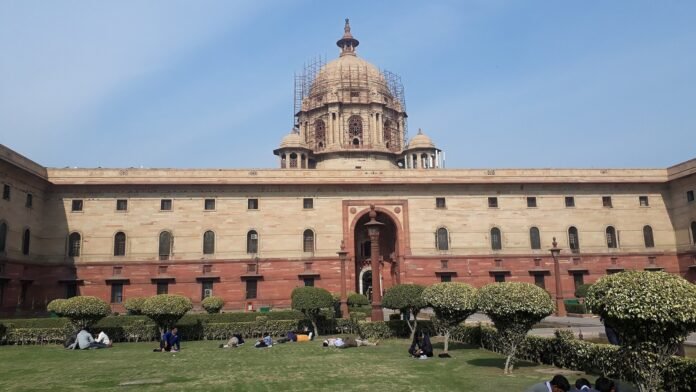
File photo: North Block, Raisina Hill, New Delhi, January 2019. Pinakpani / Wikimedia Commons, CC BY-SA 4.0. Cropped for display; adaptation retains this licence. Archival government-building image, not a photograph of Census 2027 fieldwork.
Sources
- Ministry of Home Affairs via PIB: Phase II self-enumeration begins
- Census of India: Official calendar and notifications
- Office of the Registrar General: Digital collection and SE ID workflow

The National Desk covers India's politics, governance, security and public-interest news. Stories are checked against at least two credible sources before publication.