November 2: The next UN climate conference, COP31, is scheduled for November 9–20 in Antalya, Türkiye, according to the United Nations and UN Climate Change. With one week remaining before the opening, the main questions for Asian readers concern climate finance, adaptation, energy investment and how announced commitments become action. The conference has not yet adopted outcomes; this guide separates the confirmed schedule and leadership from the issues negotiators will discuss.
Key highlights
- COP31 is scheduled for November 9–20 at the Antalya Expo Center.
- The World Leaders’ Summit is scheduled for November 11–12.
- Türkiye hosts the conference; Australia’s Chris Bowen is President of Negotiations.
- Blue Zone accreditation and public Green Zone access are different arrangements.
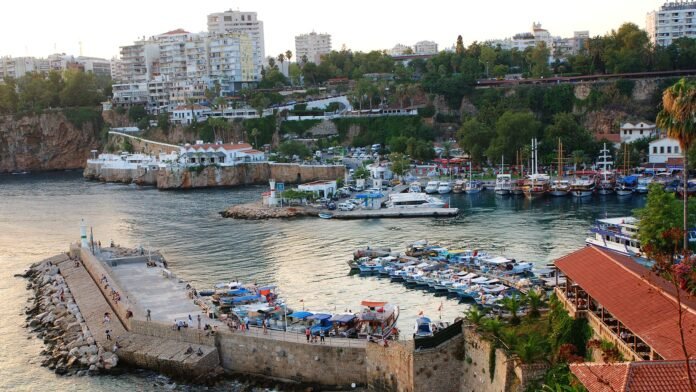
File photo: Antalya’s harbour in Türkiye (August 20, 2011). Credit: zolakoma / Wikimedia Commons, CC BY 2.0. Cropped and resized by The Press of Asia. Archival view of the host city, not the COP31 venue or the November 2026 conference.
What is confirmed about the conference
UN Climate Change identifies the venue as the Antalya Expo Center and describes Türkiye as the host. It says Murat Kurum has been nominated as COP31 President, while Australia’s Chris Bowen will be President of Negotiations. That distinction is important: hosting the meeting and directing the negotiations are related responsibilities, but they are not interchangeable titles.
The meeting includes the conference of parties to the UN climate convention, as well as the relevant meetings under the Kyoto Protocol and Paris Agreement. In practical reporting, “COP31” is the convenient umbrella term. Individual decisions still need to be read in the context of the body adopting them.
At a glance
| Item | Confirmed detail | Why it matters |
|---|---|---|
| Main conference | November 9–20, 2026 | Outcomes are still ahead |
| Leaders’ summit | November 11–12 | A specific segment within the wider conference |
| Host and leadership | Türkiye; Murat Kurum nominated president; Chris Bowen leads negotiations | Different responsibilities should be named accurately |
| Venue | Antalya Expo Center | Check official participant logistics |
| Access | Accredited Blue Zone; host-managed public Green Zone | An invitation is not the same as registration |
The issues on the agenda
The UN Climate Change explainer identifies emissions reduction, adaptation, climate finance for developing countries and a just transition as negotiation areas. It also describes a separate action agenda involving businesses, cities, states and civil society. An announcement on that action track should not automatically be described as a negotiated agreement between governments.
For Asian countries, those themes overlap with immediate economic decisions: how to finance power systems, strengthen infrastructure against climate risks and protect livelihoods during industrial change. These are the regional implications of the stated agenda, rather than a claim that every Asian delegation has adopted the same negotiating position.
Countries have different energy systems, fiscal resources and exposure to climate impacts. A useful assessment therefore asks who pays, which institutions provide the finance, whether money is a grant or a loan, and how quickly it can reach a project. A large headline financing number alone cannot answer those questions.
Why implementation will matter as much as new pledges
The UN describes COP31 as an opportunity to accelerate implementation and cooperation. For readers, the distinction between a pledge and delivery is central. Announcing a fund, approving a project and disbursing money are separate stages. A project can be approved without construction having started, while a commitment can cover several years rather than the current budget year.
A similar distinction applies to energy transitions. Installed generating capacity, actual electricity output, grid reliability and affordability are different measures. News from the conference should identify which one is being discussed, rather than treat an increase in one as proof that every part of the system has improved.
The European Union’s October 12 Council conclusions set out its pre-conference position on climate and biodiversity cooperation. That is evidence of one negotiating bloc’s approach, not a consensus already reached at COP31. Other governments’ submissions and public statements will be needed to assess where positions converge or remain apart.
Can the public attend?
UN Climate Change says official negotiations take place in the Blue Zone, which is restricted to registered participants. The Green Zone is managed by the host country and is described as open for public access. The distinction matters for journalists, researchers, students and businesses planning to travel.
The participant information page also warns about spam and phishing targeting conference attendees. Travellers should use the official registration, visa and accommodation guidance and should not assume an unsolicited message demanding personal or banking information comes from the secretariat. An invitation-looking email is not evidence of accreditation.
For remote readers, official programmes, published decisions and statements provide a clearer record than a photograph of a meeting or a short social-media clip. Those records also make it possible to check whether an announcement concerns a government decision, a corporate plan or an advocacy proposal.
What to watch
The first milestones are the November 9 opening and the November 11–12 leaders’ summit. The most consequential later developments will be the wording of adopted decisions, any agreed financing arrangements and the mechanisms for implementing them. Until those are published, a preview should not promise a particular outcome.
For Asia, the value of COP31 will be judged against practical needs: investment that can be delivered, resilience measures that protect people and a transition that communities can manage. The confirmed dates create a clear timetable for scrutiny; they do not, by themselves, establish progress on those goals.
Sources
- UN Climate Change: About COP31
- United Nations: COP31 takes place November 9–20 in Antalya
- UN Climate Change: Information for COP31 participants
- Council of the European Union: Position ahead of climate and biodiversity summits

The International Desk covers world and Asian affairs, diplomacy and conflict, with a focus on what they mean for India. Stories are checked against at least two credible sources before publication.