Update (October 17): The Election Commission revised the Delhi SIR timeline on September 28. Claims and objections can now be filed until October 30; notices and their disposal will continue until November 30; and the final electoral roll is due on December 4, All India Radio News reported. More than 2,98,400 hearings had been held in Delhi on notices issued in unmapped and logical-discrepancy cases. Separately, the ECI has ordered a Special Summary Revision of rolls in 17 states and union territories (our report).
New Delhi, September 1: About 47.58 lakh earlier voters are not included in Delhi’s draft electoral roll published after the Special Intensive Revision (SIR) of 2026, and in 13 assembly constituencies more than 40% of the earlier electorate is missing from the draft, according to official data analysed by Business Standard. In Tughlakabad about 47.8% of earlier voters are not in the draft, and in Okhla 45.2%. This is not final deletion: eligible voters whose names are missing can file claims for inclusion until September 30.
The draft roll, released by the Chief Electoral Officer (CEO) of Delhi, has raised major public and political questions in the capital. The most important point is that a draft list and the final electoral roll are not the same. A missing name does not mean an eligible citizen has permanently lost the right to vote. Claims and objections are still open, and election authorities must decide on applications backed by the right documents.
Key highlights
- About 47.58 lakh electors are reported as not included in the draft roll.
- In 13 assembly constituencies, more than 40% of earlier electors are not included.
- Tughlakabad and Okhla are among the worst-affected seats.
- The deadline for claims and objections is September 30, 2026.
- Eligible citizens can seek inclusion using Form 6 and the required documents.
Why a name may be missing
During SIR enumeration, election officials use house-to-house verification, enumeration forms and the existing database. Voters whose forms could not be collected, who were not found at their address, or who were recorded as permanently shifted, dead or duplicate can be placed in the “not included” category. The actual reason in any case depends on that person’s record.
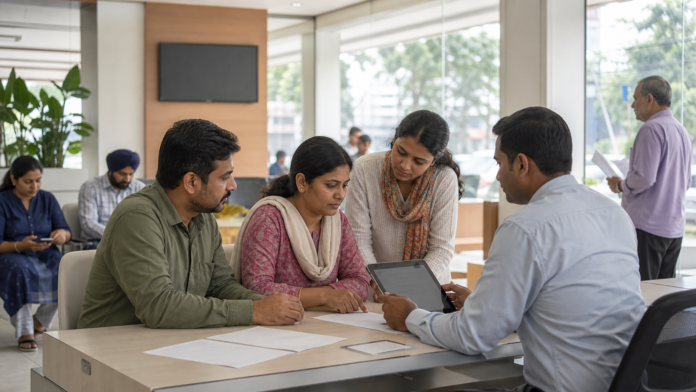
According to the CEO Delhi’s SIR guidance, voters should first check their name in the draft roll. If it is missing, they can submit Form 6 with a declaration and the prescribed supporting documents. Voters who have changed address may need to apply for inclusion at their new address.
How to check your name
- Search on the Election Commission voter portal or the ECINET app using your EPIC number and personal details.
- Check the physical copy of the draft roll with your Booth Level Officer (BLO) or the nearest Voter Centre.
- If your name is missing, ask the BLO or Electoral Registration Officer for the reason and the documents needed.
- Submit Form 6 and the declaration before the deadline, and keep the submission receipt.
- If your name or spelling is wrong, use the correction form with proof.
If the online portal has technical problems, do not rely on a screenshot alone; have your record verified at the local election office or with the BLO. Avoid handing original identity documents to political parties or unauthorised people.
Why the 13 constituencies matter
| Measure | Figure | Note |
|---|---|---|
| Electors not included in the draft roll | About 47.58 lakh | Across Delhi |
| Seats with more than 40% not included | 13 of 70 | About 19% of Delhi’s assembly seats (our calculation) |
| Tughlakabad | About 47.8% not included | Among the highest |
| Okhla | 45.2% not included | Among the highest |
| Deadline for claims and objections | September 30, 2026 | Later extended; see update above |
Our calculation: 13 of Delhi’s 70 assembly constituencies, almost one in five, have lost more than two-fifths of their earlier electorate in the draft. Changes of this size could affect constituency-level electoral arithmetic, which gives the figures both administrative and political weight. Still, drawing final conclusions from the draft would be premature: many eligible voters may be added back during the claims period, and some entries may be decided differently after objections and field checks.
The Indian Express’s district-level analysis found that some areas with low turnout in the 2025 election saw higher non-inclusion rates, but a correlation does not by itself prove a cause. Booth-wise records, reasons for non-collection and the final disposal of claims are needed to understand that.
Is a missing name a permanent deletion?
No. A draft electoral roll is published so that it can be corrected. Citizens can claim inclusion and object to wrong entries, and the election authority makes the final decision based on applications, documents and field verification. So it is not yet correct to say that “47.58 lakh voters have been permanently deleted”. This distinction matters to stop misinformation: voters should check their records in time and use the remedies available, rather than panic. The figures may change before the final roll.
Political row and administrative responsibility
The scale of non-inclusion has raised concern among opposition parties and citizens’ groups, while election authorities describe SIR as an exercise to clean the rolls by removing dead, shifted and duplicate entries. A fair assessment needs constituency-wise reasons and data on how claims are disposed of, beyond the claims of either side.
What to watch
- The number of claims and objections filed before the deadline.
- Scrutiny of applications, notices and field verification by election officials.
- How many names return in the final roll, how many objections are accepted, and how much each constituency’s electorate changes.
This article was first published in Hindi and has been translated. The Press of Asia now publishes in English only.
Sources
- CEO Delhi: SIR 2026 frequently asked questions (PDF)
- Business Standard: constituency-wise analysis of the Delhi SIR 2026 draft roll
- The Indian Express: district-level analysis of the Delhi SIR draft list
- All India Radio News: ECI revises timeline for Special Intensive Revision in Delhi

The National Desk covers India's politics, governance, security and public-interest news. Stories are checked against at least two credible sources before publication.