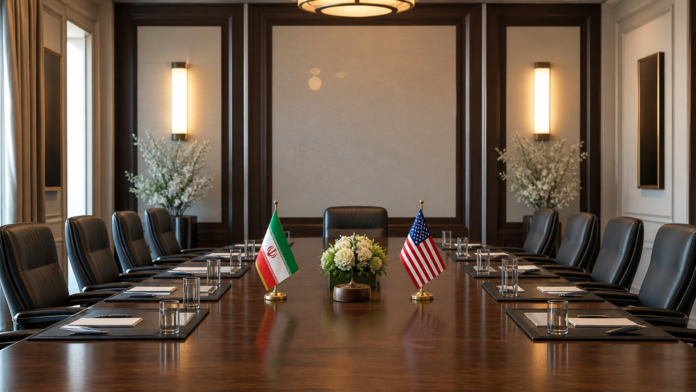
Iran ceasefire offer latest: President Masoud Pezeshkian said Tehran would immediately reciprocate if the United States returned to its commitments under a June memorandum intended to halt the conflict. The statement is a conditional diplomatic opening, not a restored ceasefire, and Washington had not publicly accepted it at the time of publication.
BISHKEK, 1 September 2026: Pezeshkian made the remarks during the Shanghai Cooperation Organisation summit in Kyrgyzstan, after a renewed exchange of fire raised fears that the US-Iran confrontation could again escalate. He accused Washington of failing to implement the earlier agreement and said Iran would respond in kind if the United States resumed compliance.
The comments matter because the conflict has disrupted shipping, energy markets and regional security for months. They also came at a summit attended by the leaders of India, China and Russia, giving the statement a wider diplomatic audience.
Key highlights
- Iran says it is prepared to return to the June framework if the US does the same.
- The proposal is conditional and does not itself stop military action.
- The June memorandum envisaged a halt in fighting and a 60-day negotiation period.
- That negotiating window passed without a broader agreement.
- Tensions rose again after an exchange of fire over the weekend and warnings of further US action.
- The Strait of Hormuz remains central to both the talks and global energy risk.
What Pezeshkian said
According to Iran’s presidency and reports by Reuters and Associated Press, Pezeshkian said that if the United States returned to its commitments under the memorandum of understanding, the Islamic Republic would take reciprocal action immediately. His formulation placed the first move on Washington while keeping open a path back to negotiations.
The Iranian president has generally represented the more negotiation-oriented wing of the country’s leadership. He does not, however, control every military and security decision. The Islamic Revolutionary Guard Corps and other power centres have pushed for tougher terms, especially over the Strait of Hormuz and compensation for wartime losses.
What was in the June memorandum?
The interim framework was designed to stop fighting and create time for a wider settlement. It included commitments related to ending hostilities, easing US economic restrictions, reopening maritime traffic and holding further negotiations. The arrangement also addressed the Strait of Hormuz, a crucial route for oil and liquefied natural gas exports.
The agreement quickly ran into disputes over sequencing and implementation. Each side accused the other of failing to meet its obligations. The 60-day negotiation period expired without a comprehensive peace agreement, leaving the region with a fragile lull rather than a durable settlement.
Why this is not yet a new ceasefire
A political offer and an operational ceasefire are different. A ceasefire would normally require both sides to communicate acceptance, issue military instructions and agree on monitoring or deconfliction procedures. None of those steps had been jointly announced when this report was published.
Pezeshkian’s remarks therefore signal willingness to bargain, but they do not guarantee that attacks will stop. The possibility of miscalculation remains high while forces are deployed, ships face restrictions and political leaders continue to threaten retaliation.
The Strait of Hormuz problem
Tehran has linked free navigation through the strait to US compliance with the memorandum. Washington and its partners view unrestricted commercial passage as a core requirement. Those positions make the waterway both a negotiating lever and a potential trigger for escalation.
The Press of Asia has previously examined the movement of Indian oil tankers after an earlier ceasefire opening and the risks to Gulf energy infrastructure. Those episodes show how quickly diplomatic optimism can be reversed by events on the ground.
What it means for India
India has a strong interest in de-escalation. Higher Gulf risk raises crude and shipping costs, pressures the rupee and can feed inflation. India also has citizens and commercial interests across the region, while a large share of its imported energy moves through or near Hormuz.
Prime Minister Narendra Modi’s presence at the SCO summit gives New Delhi an opportunity to support diplomacy while maintaining relations with the United States, Iran and Gulf partners. India is unlikely to endorse every Iranian demand, but it benefits from any arrangement that restores predictable shipping and reduces the risk premium in oil markets. The broader domestic consequences are explained in The Press of Asia’s report on oil prices, inflation and the Indian economy.
What happens next?
The immediate test is whether Washington responds formally and whether military activity subsides. Diplomats will also watch for mediation by Pakistan, Qatar or SCO members, and for practical measures such as safer shipping lanes, sanctions waivers or renewed technical talks.
A durable agreement would still have to address nuclear issues, sanctions, maritime security, reconstruction and enforcement. Pezeshkian’s statement has reopened a diplomatic door, but the distance between an offer and an enforceable settlement remains substantial.
Sources / References
- Associated Press — Iran and Middle East developments
- Reuters — Iran’s conditional offer and US response context
- Anadolu Agency — statement attributed to the Iranian presidency

The International Desk covers world and Asian affairs, diplomacy and conflict, with a focus on what they mean for India. Stories are checked against at least two credible sources before publication.