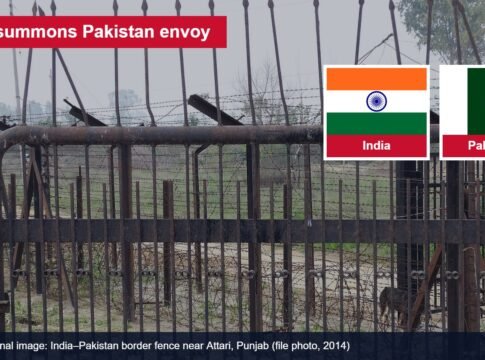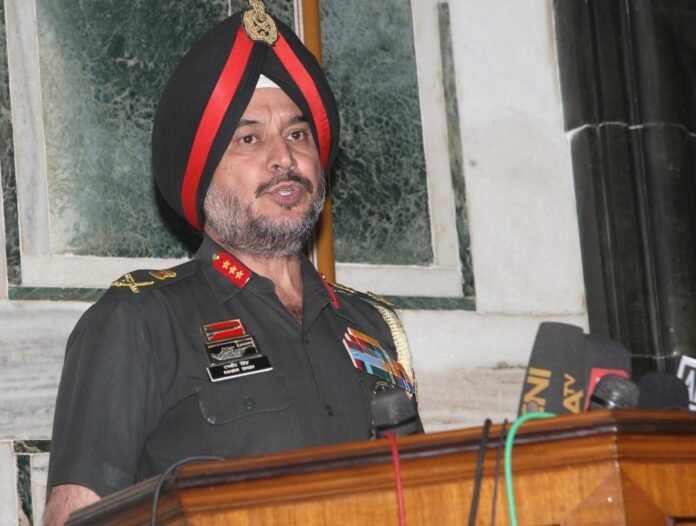
New Delhi, September 28: Ten years ago tonight, Indian special forces crossed the Line of Control to strike what the Army described as terrorist launch pads in Pakistan-administered Kashmir. The surgical strikes of September 28-29, 2016, came 11 days after the attack on the Army camp at Uri. A decade on, Prime Minister Narendra Modi calls them the start of a “zero-tolerance” approach to terrorism, one that has since escalated from a ground raid to air strikes and, in 2025, to a wider military operation.
Key highlights
- 2016, surgical strikes: A cross-LoC raid on September 28-29 after the Uri attack, which killed 19 soldiers according to most accounts.
- 2019, Balakot: Air strikes on February 26 after the Pulwama attack on a CRPF convoy.
- 2025, Operation Sindoor: Strikes on nine sites in Pakistan and Pakistan-administered Kashmir on May 7 after the Pahalgam massacre of 26 civilians; a ceasefire followed on May 10.
- The message: “India pursues a zero-tolerance policy against terrorism,” Modi said in his Mann Ki Baat broadcast on September 27.
What happened in 2016
On September 18, 2016, militants attacked an Army camp at Uri in Jammu and Kashmir. India blamed the Pakistan-based Jaish-e-Mohammed. On September 29, the then Director General of Military Operations, Lt Gen Ranbir Singh, announced that Indian teams had struck “terrorist launch pads” across the LoC the previous night, acting on what he called very credible and specific information about planned infiltration.
Pakistan rejected India’s account, saying there had only been cross-border firing, and its then prime minister Nawaz Sharif condemned what he called unprovoked aggression. The number of militants killed has remained disputed: India put it at 35-40, while independent analysts suggested a lower figure. What was not disputed was the political significance: India had publicly announced a cross-LoC military response to a terror attack, something it had avoided after earlier attacks.
Modi’s message on the anniversary
Speaking in the 138th episode of Mann Ki Baat on Sunday, Modi recalled the strikes as “a major historic achievement” and said they “boldly demonstrated to the entire world a new example of India’s counter-terrorism policy”. He contrasted it with the past, when, he said, after every terror attack there were demands for action against Pakistan but the government waited for time to pass. He referred to the Delhi serial blasts of September 13, 2008, and the 26/11 Mumbai attacks as examples of that period (read our full Mann Ki Baat report in Hindi).
From ground raid to air power: how the response has escalated
The last decade shows a clear pattern: each major attack has been met with a response that went a step further than the last.
- Uri to surgical strikes (2016): A limited ground raid a short distance across the LoC.
- Pulwama to Balakot (2019): After the February 14 bombing of a CRPF convoy, the Indian Air Force struck a Jaish camp near Balakot in Khyber Pakhtunkhwa, beyond Kashmir. Pakistan retaliated the next day, and an Indian pilot, Wing Commander Abhinandan Varthaman, was captured and later returned. The damage caused at Balakot has been disputed by independent analysts.
- Pahalgam to Operation Sindoor (2025): After 26 civilians, mostly tourists, were killed on April 22, 2025, India struck nine sites on May 7, including sites in Bahawalpur and Muridke linked to Jaish-e-Mohammed and Lashkar-e-Taiba. The exchange that followed lasted until a ceasefire on May 10.
The strategic logic is deterrence by punishment: making clear that attacks traced to groups based in Pakistan will bring a military cost. Critics and analysts have raised the counterpoint that each round carries a higher risk of escalation between two nuclear-armed neighbours, and that the 2025 conflict also brought civilian and military casualties on both sides.
What has not changed
Military responses have not ended the threat. Attacks continued after 2016 and after 2019, and the Pahalgam massacre showed that civilians remain vulnerable. India’s diplomatic approach has therefore run in parallel: pressing Pakistan at the United Nations and in forums such as the Financial Action Task Force. At the UN General Assembly on September 26, External Affairs Minister S Jaishankar called cross-border terrorism “a direct affront to the global order” (read our report), and India delivered a sharp reply to Pakistan’s prime minister (read more).
Why the anniversary matters
The surgical strikes changed public expectations in India. After 2016, the question after any major attack is no longer whether India will respond, but how and when. That raises the stakes for every future crisis. The challenge for the next decade is to keep deterrence credible while preventing escalation, improving intelligence and border security so that attacks are stopped before they happen, and keeping international pressure on groups that plan them.
Sources / References
- Kashmir Images: Surgical strikes showed India’s new anti-terror resolve, PM Modi
- IANS (Hindi): Mann Ki Baat, zero-tolerance policy
- Wikipedia: 2016 Indian Line of Control strike
- Wikipedia: 2019 Balakot airstrike
- Wikipedia: Operation Sindoor

The National Desk covers India's politics, governance, security and public-interest news. Stories are checked against at least two credible sources before publication.