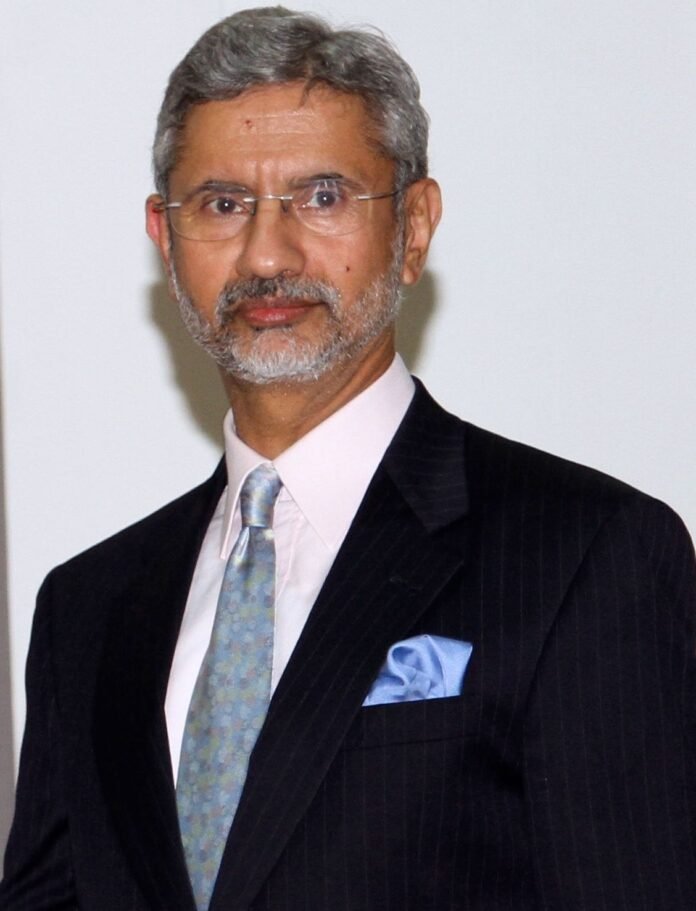
New York, September 27: External Affairs Minister S Jaishankar used India’s address to the general debate of the 81st UN General Assembly on Friday, September 26, to deliver a blunt message: the world’s conflicts are no longer confined to battlefields, and countries far from them are paying the price. He warned that “everything is being weaponised” in global competition, called for restraint in West Asia, and repeated India’s zero-tolerance stand on cross-border terrorism.
Key highlights
- Weaponisation: Jaishankar said finance, market access, technology, supply chains, resources and connectivity are being used as tools of pressure.
- Global South: He said the crisis in food, fuel, fertilisers and financing hits developing countries hardest.
- West Asia: India voiced concern over attacks on commercial ships and backed a two-state solution for Israel and Palestine.
- Terrorism: He called state-sponsored, cross-border terrorism “a direct affront to the global order”, and described Pakistan as a serial practitioner of terrorism.
- UN reform: He argued that the 1945 order faces new realities and that international peace needs broader participation and meaningful reform.
“From an endless war to ending the war”
According to UN News, Jaishankar told the Assembly that countries far from conflict zones are bearing the cost of wars that are not their own, and urged the world to shift its focus “from an endless war to ending the war”. He described the conflict in Ukraine as equally concerning and called for restraint and de-escalation in West Asia.
The warning reflects India’s own exposure. Disruptions around the Strait of Hormuz this year have pushed up oil and shipping costs, which directly affect Indian inflation, the rupee and the stock market. Jaishankar raised concerns about attacks on commercial vessels in international waterways and stressed the uninterrupted movement of energy supplies and humanitarian aid. The latest diplomacy over Hormuz is covered in our report on Iran’s seven-day Hormuz plan.
The weaponisation warning
The line that stood out was Jaishankar’s assessment that “everything is being weaponised”. As reported by Dynamite News, he listed finance, market access, technology, supply chains, resources and connectivity as areas where states now apply economic and strategic pressure, creating uncertainty and eroding trust. UN News also noted his remark that hyper-competition is undermining institutions and pushing countries towards a de-risking mindset.
For India, this is not abstract. Tariff threats, export controls on chips and critical minerals, and sanctions affecting energy purchases have all shaped Indian policy choices in recent years. Jaishankar’s argument is that when economic ties become instruments of coercion, the developing world, with fewer buffers, suffers first.
Food, fuel, fertiliser and finance
Speaking for the Global South, Jaishankar said the crisis in food, fuel, fertilisers and financing hits developing countries disproportionately. He highlighted India’s development partnerships, which UN News put at 600 projects across 78 countries, in areas such as renewable energy, infrastructure, agriculture, technology and capacity building. The message was that India wants to be seen not only as a large economy with its own interests, but as a partner for other developing nations.
Pakistan and terrorism
On terrorism, Jaishankar called state-sponsored, cross-border terrorism a direct affront to the global order and insisted on zero tolerance. The Statesman reported that he described Pakistan as a “serial practitioner of terrorism” and said that “friendship and goodwill cannot coexist with terrorism”. He also warned that arguments were being used to normalise terrorism and claim immunity from its consequences, a reference to Pakistan’s statements at the Assembly.
The remarks follow India’s sharp right of reply after Pakistan Prime Minister Shehbaz Sharif raised Kashmir in his own address (read our earlier report). Together, they show that India intends to keep terrorism at the centre of any discussion of Pakistan on the global stage.
Palestine and the two-state solution
India reaffirmed that a durable and lasting peace in the region requires a two-state solution, and committed to continued humanitarian assistance to Palestinians. The position is consistent with India’s long-standing stance, but it takes on added weight as Gulf mediators publicly criticise the pace of peace efforts (Qatar PM on the Gaza peace plan).
Why the speech matters
Jaishankar’s address combined three themes India has built over several years: that the post-1945 institutions need reform to reflect today’s world, that the Global South is carrying the costs of great-power rivalry, and that terrorism cannot be treated as a bilateral irritant. What was sharper this year was the framing of economic coercion as a core threat to stability.
The practical test will be whether this translates into outcomes: progress on Security Council reform, where India has pushed with its G4 partners, cheaper and more reliable financing for developing countries, and safer sea lanes for trade. In the region, climate shocks add another layer, as Nepal’s recent call for a Himalayan climate mechanism shows (read more).
Sources / References
- UN News: Countries far from conflict paying the price for wars not their own, India tells UN
- The Statesman: In UNGA speech, Jaishankar rips into Pakistan over terrorism
- Dynamite News: India at UNGA 81, Jaishankar’s big warning

The International Desk covers world and Asian affairs, diplomacy and conflict, with a focus on what they mean for India. Stories are checked against at least two credible sources before publication.