Finance Minister Nirmala Sitharaman has urged the World Bank to assess private-capital mobilisation by the jobs and productivity it creates, rather than the amount of money raised alone.
Speaking at the 114th Development Committee Plenary in Bangkok on October 15, she called for more affordable financing, stronger risk-mitigation tools and a larger voice for developing countries. The Ministry of Finance published her intervention on the meeting’s theme of private capital and jobs.
The central argument: investment must produce results
Sitharaman put private enterprises, including small businesses and startups, at the centre of job creation. But her argument went beyond attracting investment: the test, she said, should be the resulting employment and productivity gains.
She linked that goal to macroeconomic stability, infrastructure, predictable regulation, skills and access to finance. In this approach, an isolated funding programme is insufficient unless the surrounding economic conditions allow businesses and workers to benefit.
What India wants from the World Bank Group
The minister encouraged closer cooperation among the International Bank for Reconstruction and Development, International Finance Corporation and Multilateral Investment Guarantee Agency. She also called for faster operationalisation of the World Bank Group’s Guarantee Platform.
Her intervention identified a shortage of risk capital in developing economies. Guarantees and other risk-mitigation instruments were presented as ways to encourage private investment, alongside local-currency financing, competitive pricing and lower transaction costs.
Governance indicators and developing-country representation
Sitharaman reiterated India’s concerns about the Worldwide Governance Indicators and similar composite assessments. She sought a comprehensive review of methodologies to make them more transparent, objective, evidence-based and responsive to different development experiences.
That was a policy position expressed by India, not an announcement that the Bank had accepted a revised methodology. The ministry’s release does not record a vote or an agreed reform package on the issue.
Where AI and sector expertise fit in
The minister identified urbanisation, tourism, agricultural exports and critical minerals as areas in which the Bank’s knowledge could help address market failures. She also called for more attention to the potential use of artificial intelligence in strengthening state capacity.
No new AI programme, India-specific loan amount or immediate employment target was announced in the intervention. The emphasis was on how the institution should prioritise financing and expertise.
What readers should take from the meeting
The statement sets out India’s negotiating priorities: jobs, productivity, accessible finance and a stronger developing-country voice. It does not amount to a change in domestic borrowing costs or the launch of a public loan application scheme. The next test will be whether these priorities appear in agreed institutional decisions and implemented programmes.
Sources and image credit
Reporting source: Ministry of Finance intervention, October 15, 2026. This report distinguishes announced decisions from details not disclosed in the source.
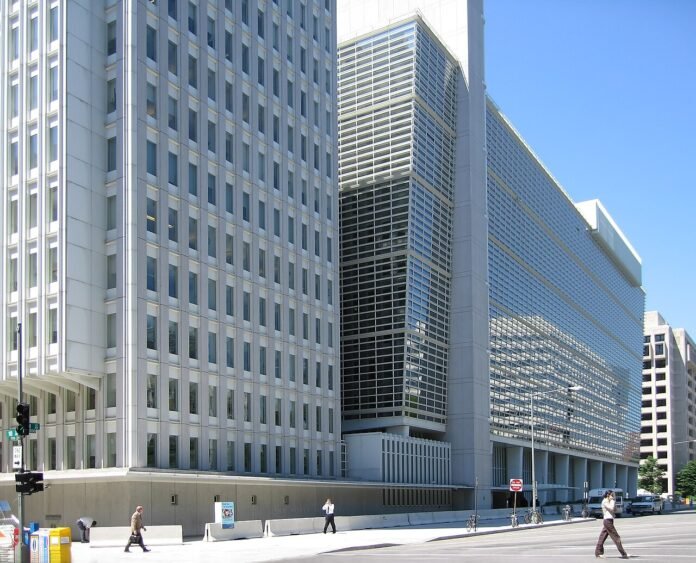
Photo: Shiny Things / Wikimedia Commons, CC BY 2.0; perspective correction by DrJunge. Archival Washington headquarters photograph, not the Bangkok meeting. Resized for display. Image source · Reuse terms.

The Business Desk covers markets, the economy, companies and personal finance. Stories are checked against at least two credible sources before publication.