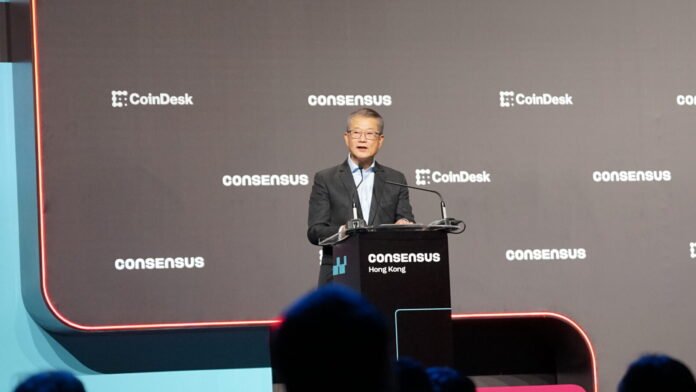
October 20: Finance ministers and senior officials from Asia-Pacific economies are meeting in Hong Kong on October 20–21, with support for households, investment in digital infrastructure and financial stability on the agenda. In a speech released today, Hong Kong Financial Secretary Paul Chan warned that geopolitical disruption and concentrated exposure to artificial-intelligence assets could test an otherwise resilient regional economy.
Key highlights
- APEC’s official calendar confirms the two-day finance ministers’ meeting in Hong Kong.
- China’s finance ministry identified livelihoods, digital infrastructure, inclusive finance and financial talent as the main themes.
- Chan called for open trade and investment channels alongside stronger financial oversight.
- The agenda is not itself a new funding commitment or a completed joint agreement.
Why ministers are gathering now
APEC describes the meeting as a forum for assessing the outlook and strengthening fiscal policy across its member economies. Its event page projects regional growth of 3.2% in 2026, compared with 3.3% in 2025, while average inflation is forecast at 2.9%, up from 2.4%. These are projections, not final annual outcomes.
Our calculation: those figures imply a 0.1-percentage-point slowdown in growth and a 0.5-percentage-point rise in inflation. A modest change in the regional average can still conceal very different conditions for individual economies, sectors and households.
The agenda at a glance
| Theme | Policy question | What would count as an outcome |
|---|---|---|
| Households | How can budgets support livelihoods? | A defined measure with funding and eligibility |
| Digital infrastructure | How should new investment be financed? | A named project or financing framework |
| Inclusive finance | Who remains outside financial services? | Specific access or regulatory measures |
| Stability | How can economies manage shared risks? | An agreed monitoring or cooperation mechanism |
Table compiled from the APEC calendar, China’s Ministry of Finance agenda and Chan’s published remarks. It separates topics for discussion from decisions that still require documentation.
AI brings investment opportunities and financial exposure
In his October 20 address, Chan said technology-related activity was supporting Asian growth. He also warned that heavily concentrated, leveraged exposure to AI-related assets could magnify a market correction and transmit it across borders. He argued for investment in digital infrastructure and skills alongside close risk monitoring.
That distinction matters for readers following the AI economy. Funding a data centre, buying shares in a technology company and improving a small business’s digital systems are different activities. A policy supporting one does not automatically guarantee returns in another. The meeting provides no assurance that a particular investment is safe.
Energy and trade remain connected risks
Chan’s speech identifies prolonged geopolitical disruption as a potential source of higher energy costs and tighter financial conditions. He urged predictable policies and continued cross-border flows of trade and investment. Dimsum Daily’s reporting on the opening separately described Hong Kong’s effort to present itself as a bridge between China and international markets.
For businesses, a useful test of any eventual announcement is whether it changes an actual financing condition, compliance requirement or project timetable. Broad language about cooperation can be significant without immediately lowering a company’s borrowing costs or an importer’s freight bill.
What to watch
Watch for the meeting’s final documents, specific commitments and follow-up responsibilities. The November leaders’ meeting in Shenzhen is a separate event; today’s finance discussions should not be presented as if leaders have already adopted every proposal. This report draws on published statements and independent coverage, not private access to the negotiations.
File photo: Hong Kong Financial Secretary Paul Chan at Consensus Hong Kong on February 10, 2026, not the October APEC meeting. Credit: Xuthoria, via Wikimedia Commons. CC BY-SA 4.0. Cropped and resized.
Sources
- Hong Kong Government: Financial Secretary’s APEC economic outlook speech
- APEC: Finance Ministers’ Meeting
- Xinhua via China Government: Finance ministry outlines APEC agenda
- Dimsum Daily: Hong Kong opens APEC finance ministers’ meeting

The Business Desk covers markets, the economy, companies and personal finance. Stories are checked against at least two credible sources before publication.