October 21: Japan’s exports rose 16.7% in September from a year earlier, supported by demand for semiconductors and products linked to artificial intelligence, Reuters reported on Wednesday. The stronger shipments did not eliminate the country’s goods-trade deficit: imports increased 18.9%, leaving a monthly shortfall of about ¥536.6 billion.
Key highlights
- Exports increased for a thirteenth consecutive month, according to Reuters’ account of Finance Ministry data.
- The 16.7% increase was slower than August’s 19.3% and below a 20.1% median market forecast.
- Japan still imported more goods by value than it exported.
- The Associated Press reported a ¥2.81 trillion deficit for the April–September fiscal half.
What changed in September
Reuters reported that exports to the United States increased 22.9% year on year, while shipments to China rose 8.6%. Those figures underline why the release matters beyond Japan: its manufacturers sell into both major economies while participating in regional production networks.
The monthly trade deficit narrowed from roughly ¥1.1 trillion in August, Reuters reported. That is an improvement in the month-to-month balance, but it is not the same thing as a surplus. Both descriptions can be true at once: export sales can grow strongly while the import bill remains larger.
The figures at a glance
| Indicator | September 2026 | How to read it |
|---|---|---|
| Exports, year on year | +16.7% | Slower growth than August |
| Imports, year on year | +18.9% | Imports also continued to grow |
| Monthly trade balance | About ¥536.6 billion deficit | A shortfall, despite narrowing from August |
| April–September balance | ¥2.81 trillion deficit, AP reported | A different, six-month reporting window |
Why energy remains important
The Associated Press linked the first-half trade deficit to higher oil import costs associated with the Middle East conflict. Its report put April–September exports at ¥63.5 trillion and imports at ¥66.3 trillion, both records, and described Japan’s heavy reliance on imported oil.
This creates two separate channels for the economy. Demand for manufactured exports can support sales abroad, while expensive imported energy increases the cost of producing and moving goods at home. A single national trade number combines these different pressures; it does not show that every industry is benefiting equally.
Value is not the same as volume
The headline percentages concern the value of trade. They should not be read automatically as equivalent changes in the physical quantity of products shipped. Prices, currency movements and the mix of goods sold can all affect the value recorded.
Likewise, comparisons between Japan and South Korea need matching periods. Japan’s September monthly figures cannot be treated as directly comparable to Korea’s October 1–20 release without making the different dates and reporting windows explicit.
What to watch
The next releases will help show whether demand for technology-related goods remains strong and whether energy costs continue to weigh on the import bill. Monthly changes should be read alongside revisions, destination data and the wider economic picture.
For now, the evidence points to resilient export growth alongside a continuing trade deficit. It supports neither a claim that Japan’s trade sector is collapsing nor a claim that the country’s energy-cost pressures have disappeared.
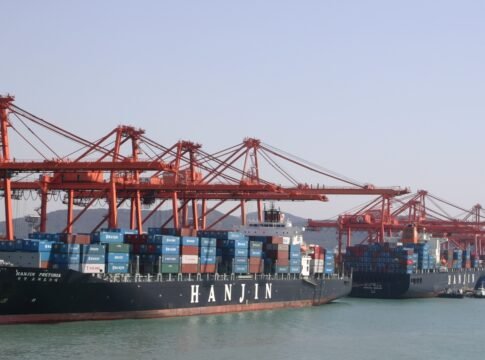
File photo: Port of Yokohama, Japan, December 31, 2009. Photograph: Aimaimyi / Wikimedia Commons, CC BY-SA 3.0. Cropped; not a photograph of September 2026 trade activity. Image source · Licence.
Sources
- Reuters: Japan’s September exports rise 16.7%, helped by chip demand
- Associated Press: Japan records a trade deficit as oil imports soar because of conflict in the Middle East

The Business Desk covers markets, the economy, companies and personal finance. Stories are checked against at least two credible sources before publication.