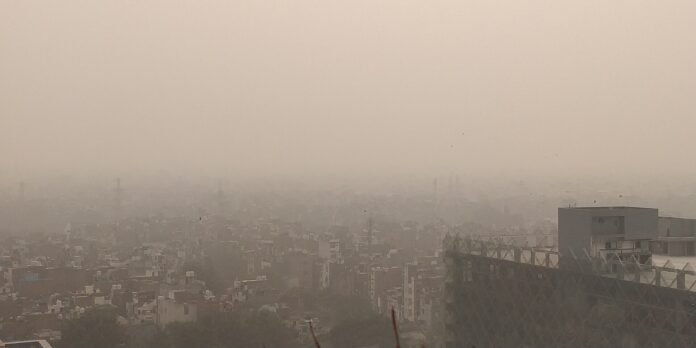
New Delhi, September 28: The Delhi government has released this year’s winter action plan before the capital’s air turns toxic. The measures announced on Monday by Environment Minister Manjinder Singh Sirsa include a ban on dust-generating construction and demolition from November 1, doubled parking fees, and work from home for 50% of staff in government and private offices. Most of the restrictions will apply from November 1, 2026, to February 28, 2027.
Key highlights
- Construction ban: dust-generating demolition and open-air civil construction banned from November 1 to January 31.
- Total ban: all construction and demolition banned from December 10 to January 20.
- Parking doubled: parking fees doubled from November 1 to February 28; Delhi Metro (DMRC) parking is exempt.
- Work from home: 50% of staff in government and private offices will work from home.
- Staggered office hours: MCD offices 8:30 am to 5 pm; Delhi government offices 10 am to 6:30 pm.
Construction and demolition banned in two phases
According to reports by ETV Bharat and Outlook, the curbs on construction will come in two phases. In the first, from November 1, 2026, to January 31, 2027, dust-generating demolition and open-air civil construction will be banned. During the worst stretch of winter, December 10, 2026, to January 20, 2027, all construction and demolition will be completely banned. According to The Daily Jagran, vehicles bringing sand, gravel and cement from outside will also not be allowed into Delhi during this period.
The calendar of curbs
| Measure | From | To | Length (our calculation) |
|---|---|---|---|
| Ban on dust-generating demolition and open-air construction | November 1, 2026 | January 31, 2027 | 92 days |
| Total ban on all construction and demolition | December 10, 2026 | January 20, 2027 | 42 days |
| Doubled parking fees (DMRC parking exempt) | November 1, 2026 | February 28, 2027 | 120 days |
| Entry ban on non-Delhi vehicles below BS-6 (EV, CNG, emergency exempt) | November 1, 2026 | February 28, 2027 | 120 days |
| 50% work from home in offices (essential services exempt) | November 1, 2026 | February 28, 2027 | 120 days |
Costlier parking, a push for the Metro
To cut the use of private vehicles, fees at authorised parking sites will be doubled from November 1 to February 28. Delhi Metro Rail Corporation (DMRC) parking has been kept out of this, so that people use the Metro through park-and-ride.
Rules for offices
During the same period, half the staff of government and private offices will work from home and half will come to office. According to The Daily Jagran, essential services will be exempt. To avoid crowding on the roads at the same time, office timings have also been staggered: Municipal Corporation of Delhi (MCD) offices will be open from 8:30 am to 5 pm and Delhi government offices from 10 am to 6:30 pm.
Tighter rules on vehicles and hotspots
According to The Daily Jagran, the plan also targets pollution from vehicles and dust:
- From November 1 to February 28, vehicles registered outside Delhi that are below the BS-6 standard will not be allowed in. Electric, CNG and emergency vehicles are exempt.
- A valid PUC certificate will be required to get fuel at petrol pumps.
- District magistrates are reviewing 62 pollution hotspots (areas of 3 km radius, including cremation grounds and garbage sites); 42 of them have been brought under control.
- The DPCC, MCD and Delhi Police will carry out intensive road cleaning every fortnight.
- 150 new electric buses have been added to the existing fleet of 588, and temporary warm shelters will be set up under a “zero burning” initiative to stop open fires.
What to watch
- How strictly the rules are enforced and monitored once they start on November 1.
- Any relief measures for construction workers who lose work during the bans; the government’s detailed plan is awaited.
- Air quality in late October, before the curbs start.
What it means
Between November and February, Delhi residents will have to prepare for some changes. Parking a private car will cost twice as much, working hours will change in many offices, and during the total ban in December and January even construction and repair work on homes and shops may stop. For construction workers the ban could also mean a loss of livelihood.
Every year from late October, Delhi-NCR’s air falls into the “very poor” category because of stubble smoke, vehicles, construction dust and cold weather that traps pollutants near the ground. This time the government has fixed a calendar of curbs about a month in advance rather than acting after pollution rises. The real test will be in how the rules are followed and monitored.
This article was first published in Hindi and has been translated. The Press of Asia now publishes in English only.
Sources
- ETV Bharat: Delhi Winter Pollution Action Plan: Construction Ban, Double Parking Fees, 50% Work From Home Announced
- Outlook India: Construction Ban, Double Parking Charges: What We Know About Delhi’s Winter Pollution Plan
- The Daily Jagran: Construction Ban, 50% Work-From-Home, And Double Parking Charges

The National Desk covers India's politics, governance, security and public-interest news. Stories are checked against at least two credible sources before publication.