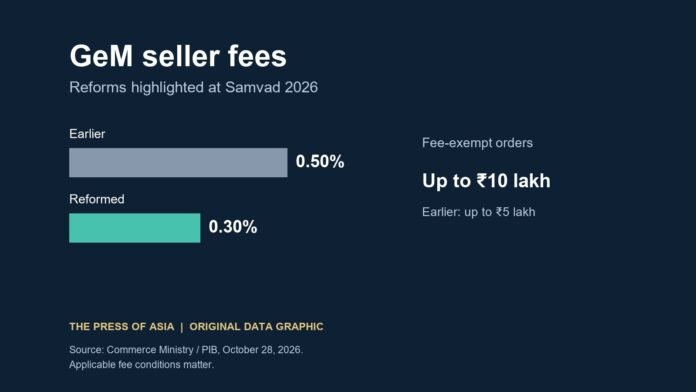
October 29: Government e Marketplace highlighted lower transaction charges and wider fee exemptions at GeM Samvad 2026, according to an October 28 Commerce Ministry release. For micro and small enterprises assessing public procurement, the useful distinction is between the marketplace’s transaction charge and the separate cost of financing an order or invoice.
Key highlights
- The transaction-charge rate has fallen from 0.50% to 0.30%.
- Orders up to ₹10 lakh are exempt, compared with the earlier ₹5 lakh threshold.
- The ministry said nearly 97% of orders attract no transaction charge.
- Sellers should also check current notices from their chosen invoice-finance platform.
The fee changes in one table
| Item highlighted at GeM Samvad | Earlier position | Reformed position |
|---|---|---|
| Transaction-charge rate | 0.50% | 0.30% |
| Order-value exemption threshold | ₹5 lakh | ₹10 lakh |
| Maximum charge for orders above ₹10 crore | ₹72.50 lakh | ₹3 lakh |
Our calculation: reducing a rate from 0.50% to 0.30% is a reduction of 0.20 percentage points, or 40% of the former rate. The exemption threshold has doubled. Those comparisons describe the rules; the applicable order value and fee conditions still matter for a particular transaction.
A procurement charge and working capital answer different questions
A transaction charge concerns use of the procurement marketplace. Working capital concerns how a supplier pays for goods, materials and operations before receiving the buyer’s payment. Lowering the first cost can help a supplier without eliminating the second.
The ministry said GeM had integrated with all five TReDS exchanges and highlighted GeM SAHAY lending against purchase orders. The RBI describes TReDS as a system for financing or discounting MSME trade receivables through multiple financiers, including receivables owed by government departments and public-sector buyers.
The distinction between a purchase order and an accepted invoice is useful. One records an order to supply; the other records a receivable after the relevant supply and acceptance process. Suppliers should identify the stage being financed and the terms attached to that facility.
An important October 30 platform notice
C2treds’ own website carries a notice that it intends to cease TReDS platform operations from October 30, 2026. The company says the RBI has accepted its voluntary surrender of authorisation and that it will stop onboarding new customers and financing new factoring units from that date.
That dated notice is relevant when reading an aggregate statement about integration with five exchanges. A technical integration count does not establish that each provider will continue accepting new business. Existing users should read the provider’s current communication about their arrangements; this report has not checked individual accounts.
A practical checklist for a small supplier
Before pricing a bid, identify the category requirements, applicable marketplace charges and the buyer’s delivery and acceptance conditions. Then assess financing costs separately. An exemption from one platform charge does not, by itself, establish the total cost of fulfilling a contract.
A supplier comparing invoice-finance options should identify who accepts the invoice, which financier offers the terms and the current service status of the platform. The RBI’s description of competitive financing explains the mechanism, rather than guaranteeing a particular rate or approval to every applicant.
What to watch
The Samvad release summarises reforms discussed at the event, including changes introduced earlier. Future official notices and providers’ operational updates will be more useful than treating every item as a rule first introduced on October 28. The immediate priority for sellers is to match current terms to the actual order and financing stage.
Sources
- Commerce Ministry via PIB: GeM Samvad 2026 and procurement reforms for MSEs
- Reserve Bank of India: Trade Receivables Discounting System FAQs
- C2treds: Platform cessation notice and FAQs

The Business Desk covers markets, the economy, companies and personal finance. Stories are checked against at least two credible sources before publication.