NEW DELHI, October 16, 2026: India has revised the export levies on petrol and diesel for the fortnight beginning October 16, raising the duty on exported petrol and nearly halving the one on diesel, while leaving the rate on aviation turbine fuel (ATF) unchanged. Exported petrol now attracts ₹2.50 a litre, up from ₹0.50; diesel falls to ₹8.50 from ₹16; and ATF stays at ₹10.50, according to the rate tables published by the Petroleum Planning and Analysis Cell (PPAC). Excise duty on fuel sold within India is not affected.
Key highlights
- Petrol export levy: ₹2.50 a litre from October 16, up from ₹0.50 on October 1.
- Diesel export levy: ₹8.50 a litre, down from ₹16.
- ATF export levy: ₹10.50 a litre, unchanged.
- The levies have applied since March 27, 2026 and are reset every fortnight against average international prices.
- Domestic excise on petrol and diesel is unchanged, so this revision does not by itself change pump prices.
What changed on October 16
| Fuel | From October 1 | From October 16 | Change |
|---|---|---|---|
| Petrol | ₹0.50 | ₹2.50 | +₹2.00 |
| Diesel | ₹16.00 | ₹8.50 | −₹7.50 |
| Aviation turbine fuel | ₹10.50 | ₹10.50 | No change |
Our calculation: The diesel levy fell by ₹7.50, or about 47%, in a single fortnight. Measured from its peak of ₹55.50 a litre on April 11, it is now about 85% lower. The petrol levy rose five-fold in percentage terms, but by only ₹2 a litre in absolute terms.
Why India taxes fuel exports
The levies were introduced on March 27, 2026, during the West Asia crisis, with the stated aim of keeping petroleum products available at home by making exports less attractive. The government reviews the rates every fortnight, using average international prices of crude oil, petrol, diesel and ATF since the previous review. When overseas fuel prices and refining margins climb, the levy tends to rise; when they ease, it comes down.
The duty is collected mainly as a Special Additional Excise Duty on exports. At times it has also included an additional component: in early April, the diesel levy combined ₹24 of special duty with ₹31.50 of additional duty.
Seven months of fortnightly changes
| Effective date | Petrol | Diesel | ATF |
|---|---|---|---|
| March 27 | — | ₹21.50 | ₹29.50 |
| April 11 (peak) | — | ₹55.50 | ₹42.00 |
| May 16 | ₹3.00 | ₹16.50 | ₹16.00 |
| July 1 | ₹4.00 | ₹8.50 | ₹7.50 |
| August 3 | ₹3.50 | ₹25.50 | ₹22.00 |
| September 1 | ₹1.50 | ₹25.00 | ₹19.00 |
| October 1 | ₹0.50 | ₹16.00 | ₹10.50 |
| October 16 | ₹2.50 | ₹8.50 | ₹10.50 |
The pattern shows how closely the levy tracks world markets. Diesel, the fuel India exports in the largest volumes, has swung between ₹8.50 and ₹55.50 a litre. The current rate equals the lowest level so far, last seen in early July.
Why this is not a retail-price announcement
An export levy applies only to fuel leaving the country. Pump prices in India depend on the domestic excise duty, state value-added tax and the pricing decisions of oil marketing companies, none of which changed with this notification. Readers should not treat the headline figures as an increase or cut at filling stations.
What it means
For export-oriented refiners, a lower diesel levy improves the return on shipping fuel abroad and suggests that international diesel margins have eased from their summer highs. For the government, smaller levies mean less revenue from this source, but the main purpose was always supply security rather than revenue. For households, the more relevant signal is that the pressure that justified the levy appears to be easing, although retail prices have not moved on this account.
What to watch
- The next fortnightly reset, due on November 1.
- Whether the diesel levy keeps falling towards zero if world prices stay calmer.
- Domestic fuel availability during the winter and rabi sowing season, when diesel demand rises.
- Any change in domestic excise or state taxes, which would matter more for pump prices than export levies.
Updated October 25, 2026: this report was expanded with the full levy history since March, our calculations and context on how the fortnightly reset works.
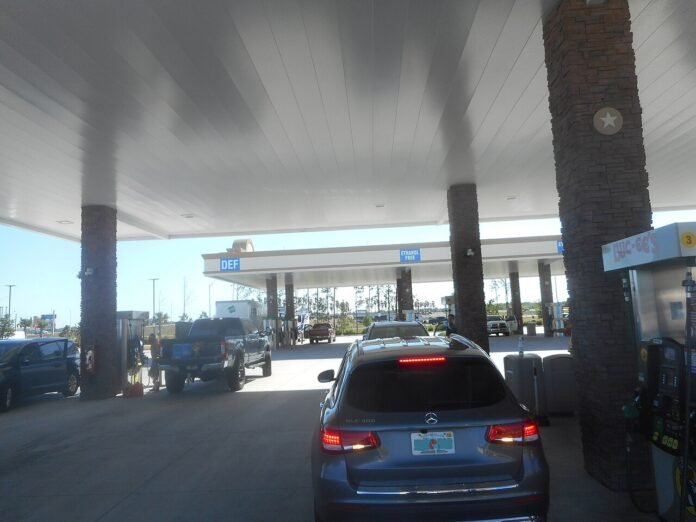
Representative file photo: fuel pumps in Daytona Beach, Florida, March 23, 2023; not an Indian filling station. Photo: DanTD / Wikimedia Commons, CC BY-SA 4.0. Resized for display; image adaptations retain the same licence.
Sources
- Petroleum Planning and Analysis Cell: Excise duty on export of petrol, diesel and ATF (rate table)
- Press Information Bureau: Export levies on petrol, diesel and ATF for the fortnight beginning June 1, 2026 (how the rates are set)

The Business Desk covers markets, the economy, companies and personal finance. Stories are checked against at least two credible sources before publication.