WASHINGTON, November 1: US Secretary of State Marco Rubio said Washington had heard Pakistan’s concerns about terrorist attacks “sponsored from the territory of Afghanistan” and would play a productive role if one were available, while acknowledging that the US does not have “the closest relationship with the Taliban.” Speaking to reporters in Atlanta on October 31 after hosting the G20 foreign ministers’ meeting, Rubio also said a Quad leaders’ meeting was planned in Manila and that President Donald Trump remained open to talks with North Korea’s Kim Jong Un.
Key highlights
- On Pakistan: the US does not want Pakistan targeted by terrorism and would play a productive role if possible, Rubio said.
- On the Quad: a leaders’ meeting is planned in Manila, with announcements expected in November; Rubio called the Quad “not an anti-China or anti-anybody coalition.”
- On India: Rubio cited Iranian attacks on ships carrying Indian sailors and said India had shown interest in floating ideas for moving grain through the Black Sea.
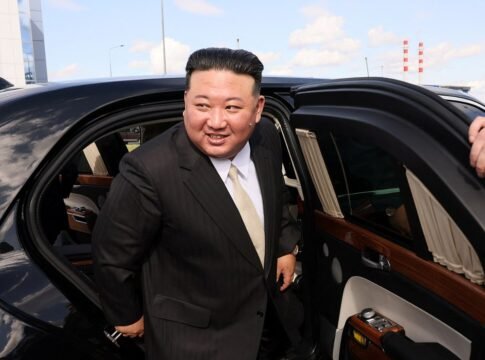
- On North Korea: the President is open to talks if Kim is prepared to discuss US and allied concerns, but nothing is scheduled.
- On the G20: ministers agreed on the problems — navigation, critical minerals, supply chains and food security — but Rubio said he could not say they were aligned on how to solve them.
Pakistan and Afghanistan
Rubio framed the issue as Pakistan’s concern about attacks launched from Afghan territory. He said the United States did not want Pakistan to be the target of terrorism and would help if there were a productive role to play, but was candid that Washington’s ties with Afghanistan’s Taliban rulers are limited. Pakistan has repeatedly accused the Taliban government of allowing militant groups to operate from Afghanistan, a charge the Taliban deny.
What Rubio said, country by country
| Topic | What Rubio said (October 31) |
|---|---|
| Pakistan | US has heard concerns about attacks “sponsored from the territory of Afghanistan”; would play a productive role if one exists |
| India | Iranian attacks have hit ships carrying Indian sailors; India interested in ideas for Black Sea grain shipments; India has roles in both the G20 and the Quad |
| Quad | Leaders’ meeting planned in Manila; work on a Quad business forum and maritime awareness |
| China | Concerns are about behaviour, including coercion in the South China Sea and around Taiwan |
| North Korea | Trump “will talk to anybody”; nothing scheduled |
| Japan and South Korea | Signed a cooperation memorandum on a trilateral Arctic Pacific partnership on October 30 |
The Quad and Manila
Rubio said the Quad — Australia, India, Japan and the United States — aims to produce concrete results such as humanitarian relief, disaster response and maritime awareness, and that a leaders’ meeting was planned in Manila. He did not give a date. The Philippines chairs ASEAN this year and is due to host ASEAN summit meetings in mid-November. Quad foreign ministers met on the sidelines of the Atlanta gathering and announced work on trusted AI and supply chains.
Our calculation
- A crowded calendar: a Quad leaders’ meeting in Manila (expected in November), a G7 meeting in France in a few weeks and the G20 summit in Doral, Florida, in December put three major meetings within about two months.
What it means
For Pakistan, Rubio’s comments are a public acknowledgement of its security concerns, but not a promise of action, given Washington’s limited leverage over the Taliban. For India, the remarks underline its place in both the G20 and the Quad, and its exposure to attacks on shipping in the Middle East. A Quad leaders’ meeting in Manila would also bring the grouping closer to Southeast Asia at a time of tension in the South China Sea.
What to watch
- Confirmation of the date and agenda of the Quad leaders’ meeting in Manila.
- The G20 chair’s statement Rubio said he would release after the Atlanta meeting.
- Any US move to mediate or engage on Pakistan–Afghanistan security.
- North Korea’s response to the renewed offer of talks.
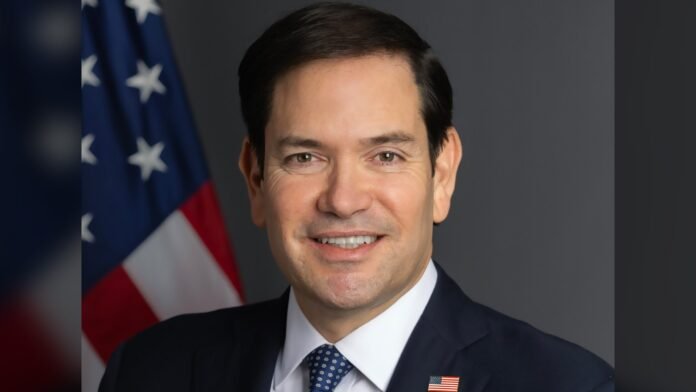
File photo: official portrait of US Secretary of State Marco Rubio, January 2025. Image: U.S. Department of State, public domain, via Wikimedia Commons. Photo source
Sources
- US Department of State: Secretary of State Marco Rubio at a press availability, Atlanta, October 31, 2026
- US Department of State: US–Japan–ROK trilateral foreign ministers’ meeting, October 30, 2026
- US Department of State: Secretary Rubio’s travel to Atlanta to host the G20 foreign ministers’ meeting

The International Desk covers world and Asian affairs, diplomacy and conflict, with a focus on what they mean for India. Stories are checked against at least two credible sources before publication.