WASHINGTON, November 1: Americans vote on Tuesday, November 3, in midterm elections that will decide control of Congress for the second half of President Donald Trump’s term. All 435 seats in the House of Representatives and 35 of the 100 Senate seats are on the ballot, along with 36 governorships. For Asia, the result will shape how much room the White House has on tariffs, trade deals, alliances and technology controls over the next two years.
Key highlights
- Election Day is Tuesday, November 3, 2026; the House and one-third of the Senate are elected in every midterm.
- Senate seats on the ballot: 33 regular seats whose terms end in January 2027 (20 held by Republicans, 13 by Democrats), plus special elections in Ohio and Florida for seats vacated in 2025 by JD Vance and Marco Rubio.
- Republicans hold 53 Senate seats; Democrats hold 45 and two independents caucus with them.
- A House majority needs 218 of 435 seats; in the Senate, Vice President JD Vance breaks a 50–50 tie.
- Polls in the eastern states start closing early on Wednesday morning India time (around 4:30–5:30 am IST), and results will arrive through the Indian day.
What is on the ballot
| Contest | Seats | Notes |
|---|---|---|
| House of Representatives | All 435 | Two-year terms; majority is 218 |
| Senate (regular) | 33 | Class II seats: 20 Republican, 13 Democratic |
| Senate (special) | 2 | Ohio and Florida, seats vacated in January 2025 |
| Governors | 36 | State-level races |
| Current Senate | 100 | 53 Republicans, 45 Democrats, 2 independents |
Our calculation
- Who is defending more: Republicans are defending 22 of the 35 Senate seats on the ballot (20 regular plus the two specials); Democrats are defending 13.
- The Senate threshold: because the vice president is a Republican, Democrats need 51 seats for control — a net gain of four from today’s 47 including independents. Republicans can lose up to three seats and keep the majority.
- Timing for India: the US moved its clocks back on November 1, so Eastern Time is 10.5 hours behind India. A 7 pm poll closing in the east is 5:30 am IST on Wednesday; western states close several hours later.
Why Asia is watching
Congress has a say over tariffs, trade agreements, sanctions, defence budgets and export controls on advanced chips — all issues that directly affect Asian economies. A Congress controlled by the President’s party would make it easier for the administration to pass its agenda; a split Congress would mean more bargaining and more oversight hearings.
| Issue | Why it matters in Asia |
|---|---|
| Tariffs and trade deals | Several Asian governments, including India, are negotiating or finalising trade agreements with Washington |
| Chips and export controls | Affect South Korea, Taiwan, Japan and China, and companies investing in US factories |
| Alliances and defence spending | Shape US commitments to Japan, South Korea, the Philippines and Australia |
| Immigration and work visas | Matter to students and skilled workers from India and the rest of Asia |
| Sanctions | Cover North Korea, Iran and Russia, with knock-on effects for Asian energy buyers and shippers |
For India in particular, the first tranche of the India–US trade agreement has been finalised and is undergoing legal drafting, according to Indian officials; how Congress and the administration approach trade after the vote will matter for its implementation.
What it means
Midterms usually go against the party that holds the White House, but the outcome depends on a handful of close races. For Asian capitals, the practical question is whether US policy on trade and technology becomes more predictable or more contested after January 2027, when the new Congress is sworn in.
What to watch
- Results in close Senate races, which will decide the majority.
- Whether the House majority changes hands.
- Any delays in counting in states that process mail-in ballots after Election Day.
- Statements from Asian governments on trade talks once the results are clear.
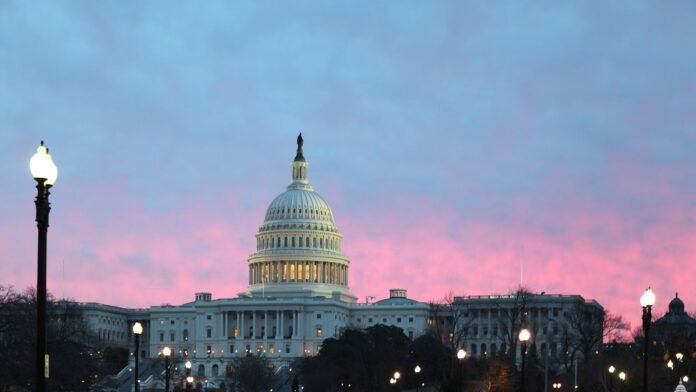
File photo: the west front of the US Capitol at dawn. Image: USCapitol (Architect of the Capitol), public domain, via Wikimedia Commons. Photo source
Sources
- USAGov: Congressional and midterm elections
- US Senate: Class II senators, terms expiring in 2027
- US Senate Daily Press: Senate facts (party division)
- Federal Election Commission: 2026 congressional primary dates and candidate filing deadlines

The International Desk covers world and Asian affairs, diplomacy and conflict, with a focus on what they mean for India. Stories are checked against at least two credible sources before publication.