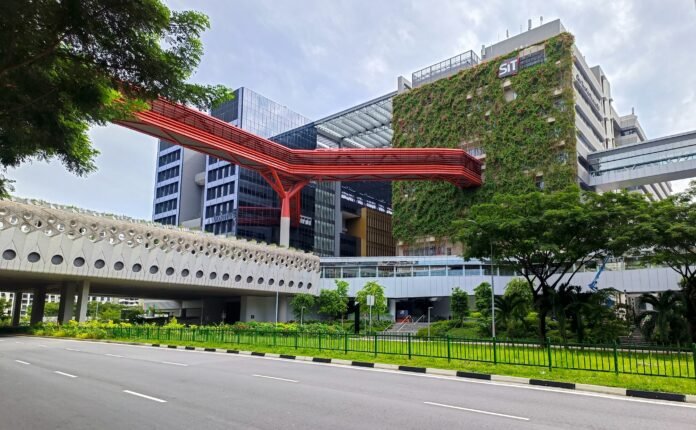
November 18: The Singapore Institute of Technology and CEVA Logistics have opened a joint laboratory to develop flexible warehouse automation, targeting work that changes with the product and customer order. The Intelligent Logistics & Autonomous Systems Lab was launched on November 17 as a five-year collaboration.
Key highlights
- The lab focuses on robotics, AI vision and connected automation.
- Kitting, labelling and packing varied products are key applications.
- Planned deployment follows testing, validation and field trials.
Why varied warehouse work is the target
SIT’s announcement describes high-mix, low-volume operations: many different products handled in relatively small batches. At CEVA’s Singapore Blue Hub, value-added services account for about half of warehouse floor hours, according to the university’s account of the partnership.
The problem is different from moving an identical item repeatedly along a fixed line. A useful system must handle changing packaging, product combinations and customer requirements. This is why successful demonstrations need to be tested under relevant working conditions before being treated as repeatable operational improvements.
A pathway from research to deployment
The university says suitable solutions will progress through pilots and field trials, with deployment at Blue Hub expected within one to two years. That is a planned pathway, not a statement that every technology under development is already operating across CEVA’s network.
Singapore’s Energy, Trade and Industry Ministry describes research on sensing, scanning and AI-based quality inspection. Its account places the lab within a broader national effort to apply AI to connectivity and logistics. The government’s S$800 million transport-and-connectivity research commitment is a wider five-year envelope; it should not be labelled the budget for this individual lab.
The workforce question alongside the machines
The ministry says a Logistics Jobs Transformation Map is being developed, with further details expected next year. Its focus includes the skills needed as digitalisation and sustainability change logistics work. This is relevant to the partnership’s stated aim of helping employees move into more skilled roles.
Our analysis: automation should be assessed by what it does to the whole process, not simply by whether a robot can perform one motion. Reliability, exception handling, maintenance and worker training all affect whether a system improves an actual warehouse operation. The announcement does not publish independently verified productivity savings or a headcount reduction.
At a glance
| Item | Announced position |
| Collaboration | Five years |
| Focus | Flexible robotics and AI for warehouse tasks |
| Initial operational destination | CEVA Blue Hub, Singapore |
| Deployment horizon | Expected within one to two years |
| Wider research allocation | S$800 million; not the lab’s stated budget |
What to watch
Watch for pilot results that explain the task, operating conditions, accuracy, safety and repeatability. Those details will show whether the research can move beyond demonstrations and become a useful tool for warehouse teams.
Sources
- Singapore Institute of Technology: CEVA and SIT launch innovation lab
- Singapore METI: Gan Siow Huang’s speech at the lab opening

The Tech Desk covers technology, artificial intelligence and cybersecurity. Stories are checked against at least two credible sources before publication.