
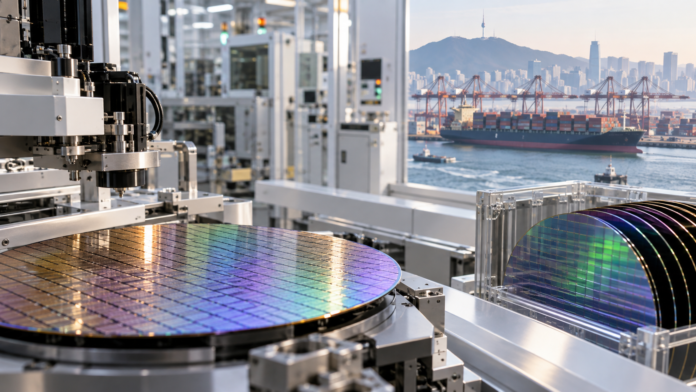

Seoul, September 22, 2026: South Korea exported $71.409 billion of goods in the first 20 days of September, up 78.3% from the comparable period a year earlier, preliminary Korea Customs Service data show. Semiconductor exports reached roughly $34.1 billion, a record for the same 20-day window. The figures underline the scale of demand for chips, but they are not a final result for the full month.
The customs agency released the provisional data on September 21. Imports were $48.443 billion, up 26.7%, producing a $22.966 billion trade surplus for September 1–20. The agency said both the overall export value and chip exports were record highs for this specific early-month reporting period.
How much of the increase came from chips?
Semiconductors accounted for about $34.1 billion of exports, nearly 48% of the $71.4 billion total. Yonhap, citing the customs data, reported chip shipments rose about 259% year on year. That suggests the sector was a major driver of the headline increase, though other goods also contributed. Yonhap reported gains in petroleum products, cars, steel and ships, while mobile-device exports dipped slightly.
The distinction between a 20-day snapshot and an entire month matters. The final September total can shift as later shipments are recorded. The year-on-year comparison also spans different numbers of working days. Korea Customs Service says there were 15.5 working days in September 1–20 this year versus 16.5 last year; its working-day-adjusted average daily export value increased 89.8%. Neither the raw 78.3% rise nor the daily figure should be presented as a forecast for the rest of the year.
Why it matters across Asia
South Korea’s chipmakers sit at the center of supply chains used by data centres, consumer electronics and industrial equipment. Strong shipments may point to continued demand, but export receipts alone do not establish that every manufacturer or customer is seeing the same growth. Prices and product mix can affect the value of shipments as well as volumes.
The Press of Asia previously examined the wider AI-driven manufacturing expansion across China, Japan and South Korea. The new customs release provides a distinct, more recent trade-data signal. Our report on China’s August trade figures offers another point of comparison, although the countries’ reporting periods and export baskets differ.
Destinations and the next data point
Yonhap reported that South Korean exports to China more than doubled to $16.6 billion in the 20-day window, while those to the United States rose 118% to $14.2 billion. Those are substantial changes, but they should be interpreted with the broader chip cycle and the later full-month data in view. The customs agency’s preliminary release is the primary source for the overall totals and the record claim.
For investors and policymakers, the next check is whether the momentum survives through September 30 and whether companies confirm similar demand in their own disclosures. This story will be updated if the final monthly release changes the picture. It would be premature to turn one short-window reading into a full-quarter economic conclusion.
AI-generated editorial illustration | The Press of Asia