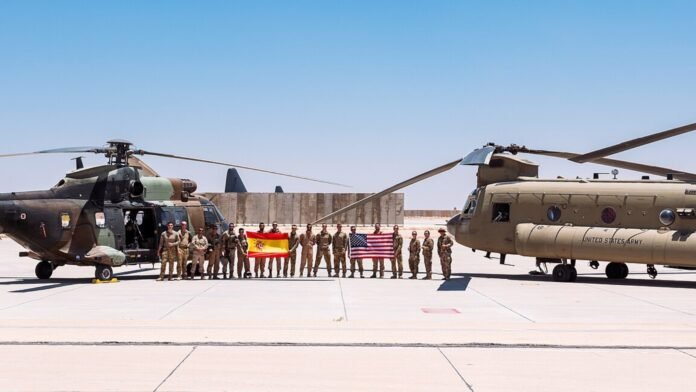
September 30: The last US troops in Iraq are due to leave by today. That ends a military presence that began with the 2003 invasion and, after a brief gap, resumed in 2014 to fight the Islamic State group. Baghdad is presenting the exit as a restoration of full sovereignty. But Iraqi Kurdish leaders and security analysts warn that the country is being left with weak air defences, armed militias that refuse to disarm, and a region still reeling from the US-Israel war with Iran.
Key highlights
- Deadline: September 30, under a timeline agreed with Washington in 2024 during the Biden administration, Stars and Stripes reported.
- How many troops: The remaining force is small. Stars and Stripes put it at fewer than 200 service members in July. Al Jazeera described “a few hundred” advisers who had consolidated at an airbase in Erbil, in the Kurdistan region, by the end of 2025.
- What stays: The US embassy in Baghdad, the largest US embassy in the world, and the largest US consulate, in Erbil, according to Al Jazeera.
- Militias: Baghdad has pushed its deadline for disarming armed factions back from September 30 to June 30, 2027. Kataib Hezbollah, Harakat al-Nujaba and Kataib Sayyid al-Shuhada say they will not give up their weapons, Middle East Eye reported.
- Kurdish worry: “We are vulnerable, we are being attacked,” Kurdistan region Prime Minister Masrour Barzani said, according to Al Jazeera.
How the US presence wound down
US troop numbers in Iraq peaked at more than 170,000 during the war that followed the 2003 invasion. Forces left at the end of 2011 but returned in 2014, when the Islamic State group seized large parts of the country. They then led an international coalition under Operation Inherent Resolve. By the time of the 2024 agreement, about 2,500 US troops remained, mostly in advisory roles, Stars and Stripes reported.
President Donald Trump has backed the pull-out. “We don’t think we need the military there anymore,” he said, according to Stars and Stripes. Defence Secretary Pete Hegseth has said that “a secure Iraq opens the door to strong commercial and defense cooperation.”
Baghdad’s message: sovereignty
Prime Minister Ali al-Zaidi has presented the exit as the end of foreign military presence in Iraq. He says the relationship with Washington will move “from military cooperation to economic and development cooperation” and that the state must be “the ultimate decision-maker in matters of peace and war,” Al Jazeera reported. Middle East Eye noted that the claim of a complete foreign exit overlooks Turkey, which still has forces in northern Iraq, although Ankara has pledged to hand over its Bashiqa base.
The security questions
According to Al Jazeera, al-Zaidi obtained 90-day assurances from both the United States and Iran-aligned militias that they would not attack after the withdrawal. But US Patriot and C-RAM air-defence systems have reportedly been removed, Iraq’s own air defences remain weak, and several security-related ministerial posts are still unfilled. Barzani has said the Kurdistan region is under attack and is being “left alone” without an appropriate defensive system.
The militia question is the hardest. Hamzeh Hadad of the European Council on Foreign Relations told Middle East Eye that for some armed groups, “they have a different raison d’être, which is fighting for Iran’s political vision.” US Secretary of State Marco Rubio has warned of Iraq’s “Balkanisation” unless the state controls armed factions, the outlet reported.
Why it matters for India
Iraq is one of India’s biggest suppliers of crude oil. Any instability in Iraq, or in the Gulf shipping lanes that carry its oil, feeds into India’s fuel import bill at a time when the Strait of Hormuz is already a flashpoint (our coverage).
What to watch
Key things to watch now: whether the 90-day truce with the militias holds, whether ISIL remnants test Iraqi forces, and whether Baghdad can make progress on disarmament before its new June 2027 deadline. Watch too whether Iraq’s security partnership with Washington, now meant to focus on training and equipment, fills the gap left by the troops.
Sources
- Al Jazeera: Iraq begins high-stakes security balancing act as US troops withdraw
- Middle East Eye: As the US pulls its forces out of Iraq, what happens to Iran-backed armed groups?
- Stars and Stripes: Last remaining US troops set to exit Iraq by Sept. 30, capping 2-decade mission

The International Desk covers world and Asian affairs, diplomacy and conflict, with a focus on what they mean for India. Stories are checked against at least two credible sources before publication.