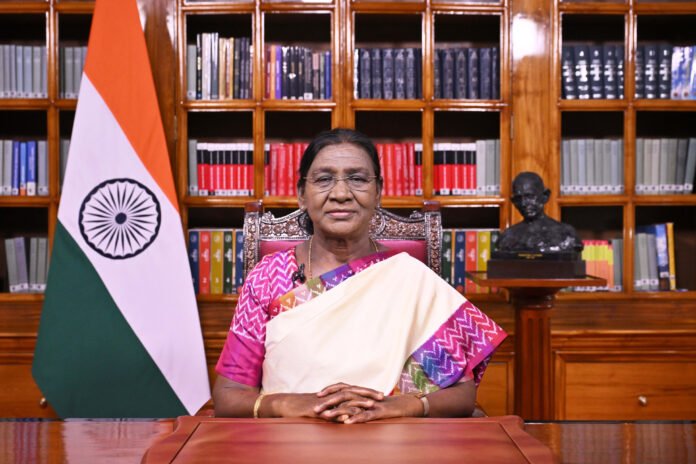
November 17: President Droupadi Murmu inaugurated year-long golden jubilee celebrations for the ICMR–National Institute of Malaria Research in New Delhi on November 17, calling attention to the next stage of India’s fight against mosquito-borne disease. The event recognises research achievements; it is not a declaration that malaria has been eliminated.
Key highlights
- Murmu opened the institute’s year-long golden jubilee celebrations in New Delhi.
- She identified climate change, urbanisation and insecticide resistance as continuing challenges.
- India’s malaria progress must be distinguished from formal malaria-free certification.
What the President said
The President’s Secretariat said Murmu highlighted the institute’s work on parasites, mosquitoes, vector control, insecticide resistance and community surveillance. She credited improvements in healthcare, diagnosis, treatment and community participation with supporting malaria control.
Murmu also warned that climate change and unplanned urbanisation could create fresh obstacles. She called for stronger cooperation between research bodies, higher-education institutions and industry. The statement sets out the President’s assessment and priorities, rather than reporting a new clinical trial or announcing a newly approved medicine.
Progress is different from elimination
WHO’s explanation of its World Malaria Report 2024 confirms that India moved out of the High Burden to High Impact group. That is a change in the country’s place within a targeted response initiative; it should not be confused with certification that malaria transmission has ended.
WHO’s World Malaria Report 2025 describes continuing global progress alongside major challenges, including antimalarial drug resistance. It records countries and a territory certified malaria-free, while examining why further reductions in disease remain difficult. Those global findings are context, not evidence of a new India-specific outbreak.
Why research remains important
Analysis: disease control needs reliable local evidence. Changes in mosquito behaviour, the effectiveness of insecticides and patterns of transmission can affect whether an intervention remains useful. A research institution’s contribution therefore extends beyond developing a single product.
Surveillance is also important when case numbers decline. A fall in recorded disease does not remove the need to detect transmission and evaluate responses. The useful test for the anniversary programme is whether it produces clearer research priorities and publicly assessable follow-up.
At a glance
| Term | What it means in this report |
|---|---|
| Golden jubilee | An institutional anniversary programme |
| HBHI group exit | A recognised change in the targeted malaria response context |
| Malaria elimination | A separate public-health objective, not declared at this event |
What to watch
Watch for the institute’s research programme and subsequent official disease-surveillance reports. Anniversary speeches should be assessed alongside published scientific evidence and the formal processes used to establish elimination.
Sources
- President’s Secretariat: Inauguration of ICMR–NIMR golden jubilee celebrations
- WHO: Questions and answers on the World Malaria Report 2024
- WHO: World Malaria Report 2025

The National Desk covers India's politics, governance, security and public-interest news. Stories are checked against at least two credible sources before publication.