
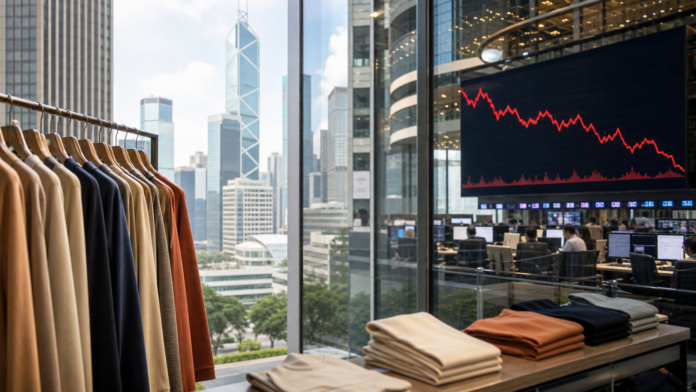

The Shein Hong Kong IPO raised about $1.7 billion, but the fast-fashion company’s shares fell on their first day of trading. The stock dropped as much as 10% in early trade before recovering part of the loss, highlighting investor concern over growth, regulation and the company’s reduced valuation.
HONG KONG | 1 September 2026
Shein began trading under stock code 625 at an offer price of HK$48.56 a share. Reuters reported that the shares were about 4% lower later in the first session after an early decline of roughly 10%. Because the market remained open when this report was prepared, the final closing price may differ.
Key numbers from the debut
- HK$48.56: the IPO price and opening reference level.
- About $1.7 billion: the amount raised in the share sale.
- $26.5 billion: the valuation implied by the IPO.
- Up to 10%: the approximate early intraday decline reported by Reuters and AP.
- 6.6%: the portion of enlarged share capital represented by shares sold in the offering.
The deal was one of Hong Kong’s largest new share sales of the year. Its significance is also historical: Shein spent years exploring listings in New York and London before completing the Hong Kong transaction.
Why Shein’s valuation matters
Shein was valued at close to $100 billion in private fundraising during 2022, according to widely reported estimates. The $26.5 billion IPO valuation therefore represents a substantial reset. A lower valuation can make a company appear cheaper, but it also reflects slower expectations and greater perceived risk.
Investors are assessing whether Shein can maintain rapid sales growth while managing regulatory scrutiny, intense competition and changes in the low-value parcel rules that supported cross-border e-commerce. The first-day decline suggests the reduced price was not enough to remove all those concerns.
The business model under scrutiny
Shein uses data-driven demand signals and a large supplier network to release new styles quickly and in small initial batches. Products that attract demand can be reordered rapidly. This approach reduces some inventory risk and helped the company compete on variety and price.
The same model creates difficult oversight questions. Regulators and campaign groups have examined supply-chain labour conditions, product compliance, environmental impact, consumer data and import treatment. Shein has said it is investing in supplier standards, compliance and logistics, but public-market investors will expect more regular disclosure than private shareholders did.
Why Hong Kong finally worked
A New York listing faced political and regulatory resistance connected with Shein’s China-founded supply chain. A planned London flotation also encountered delays. Hong Kong offered a market familiar with Chinese manufacturing and consumer platforms, while giving Shein access to public capital.
HKEX prepared additional product choices around the stock’s debut, including derivatives and short-selling eligibility. Those facilities can improve liquidity, but they can also make the first sessions more volatile as investors hedge or express negative views.
What the debut says about Hong Kong
Hong Kong has been working to rebuild its IPO pipeline and attract large international issuers. A $1.7 billion transaction adds volume and visibility even when the stock falls on debut. The longer-term test is whether the market can support continued fundraising and analyst coverage after the initial listing.
The wider Asian technology and manufacturing cycle is examined in our report on the August factory expansion across China, Japan and South Korea. For the latest semiconductor investment, see Nvidia’s $3.5 billion MediaTek deal. India’s latest technology-services transaction is covered in our ITC Infotech–Happiest Minds analysis.
What it means for India and Asian online retail
Shein’s listing does not give Indian retail investors automatic access through domestic exchanges, but the financial disclosures will offer a clearer benchmark for online fashion platforms across Asia. Indian apparel marketplaces and direct-to-consumer brands compete for many of the same price-sensitive shoppers, digital advertising channels and supplier relationships.
The transaction may also influence how investors value companies that combine e-commerce, private labels and rapid supply chains. Shein’s India operations follow a distinct local partnership structure, so global group results should not be assumed to describe the Indian business in every respect. Customs rules, data requirements and local sourcing policies can produce different economics in each market.
What investors will watch next
The closing price and trading volume will provide the first full-session signal. After that, investors will look for revenue growth, margins, customer-acquisition costs, repeat purchasing and evidence that compliance spending can coexist with competitive prices.
Share-price performance alone cannot determine whether the IPO succeeds. The company now has public reporting obligations and a wider shareholder base. Its ability to publish reliable financial and supply-chain information will influence whether the valuation gap with its 2022 peak narrows or remains.
Risks for retail investors
A famous consumer brand can attract buyers who are unfamiliar with IPO risk. Newly listed shares may trade sharply above or below the offer price, and a first-day move does not establish long-term value. Currency exposure, Hong Kong market rules and the company’s regulatory risks should be considered alongside growth prospects.
This report describes market information and is not investment advice.