The controversy around Neha Bora’s reference to Bangladesh and Prashant Bhushan’s call for “regime change” combines three separate questions: what the speakers said, what the CJP-led protest is demanding, and whether critics have produced evidence of an unlawful plan. Those questions should not be answered as though they are the same.
Reports of the October 15 press conference confirm that Bhushan supported a change of government while presenting it as a democratic right. Bora’s reported video message expressed inspiration from Bangladeshi student activism. The BJP has interpreted these statements as evidence of a wider political project. That interpretation is an allegation, not an established finding that the organisers intend violence.
1. What did Neha Bora reportedly say?
Dynamite News’s October 15 report describes a video message by the All India Students’ Association president to the sixth national conference of Bangladesh’s Socialist Students Front. It dates the message to October 14.
The report says she expressed solidarity and drew inspiration from the movements led by Bangladeshi students. It places the remarks in the context of democracy, voting rights and opposition to religious fundamentalism. It also reports her hope for cooperation towards a better South Asia.
Verification limit: The Press of Asia has not independently authenticated the complete original recording, its upload history or an authorised full transcript. This section therefore attributes the account to the published report. It does not treat a clipped social-media interpretation as proof of Bora’s intentions.
2. Did Prashant Bhushan really say “regime change”?
Yes, several contemporaneous reports record that expression. The important point is the surrounding argument. According to The Free Press Journal, Bhushan said: “We all want a regime change. Is there anything wrong with that?”
Its account says he characterised seeking a change of government as a constitutional right and criticised what he considered the BJP’s double standard, arguing that the party had itself held movements seeking political change. The report also records his distinction between opposition to government and encouragement of violence or public disorder.
Reporting the slogan without that qualification would omit a material part of his stated position. Conversely, including the qualification does not prevent scrutiny of the wider political ambition he was expressing.
3. What was the press conference about?
ThePrint’s account of the October 15 event places Bhushan alongside CJP founder Abhijeet Dipke, Bora and other public figures at the Press Club of India.
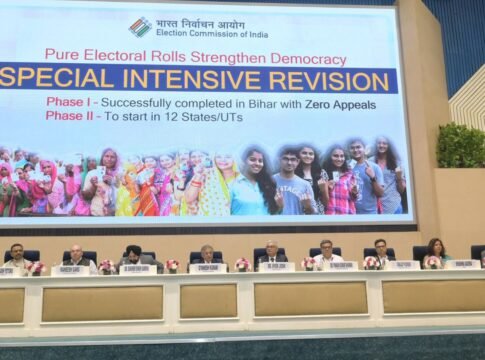
The stated demands included Chief Election Commissioner Gyanesh Kumar’s resignation over alleged problems with the Special Intensive Revision of electoral rolls; release of detained protesters, including Saurav Das and Ashutosh Ranka; an end to alleged police excesses; and restoration of Jantar Mantar as a protest venue. The allegations underlying those demands are the organisers’ claims, not findings established by their appearance at a press conference.
ThePrint also reported a planned flag protest at Connaught Place on October 16. This explainer concerns the statements and their meaning; it does not claim that the planned gathering has already taken place or establish its attendance.
4. What is the BJP alleging?
The Federal’s report records BJP MP Sambit Patra arguing that the remarks exposed an attempt to gain power outside the electoral process. It also records spokesperson Pradeep Bhandari’s use of Bora’s Bangladesh reference to accuse the opposition of promoting anarchy and pursuing a Bangladesh-style movement.
The same report records Bhushan’s account that the immediate struggle concerned properly conducted elections and his broader defence of political change. These are competing public positions. The BJP’s description of a conspiracy or coup should be identified as its accusation, rather than adopted as the newsroom’s conclusion.
No independently verified operational plan for a violent overthrow has been established by the material reviewed for this article. That is a limit on the available evidence, not a certification of every participant’s conduct.
5. Why Dipke’s subsequent statement matters
There is also a statement that complicates the claim that all participants share one declared objective. NDTV’s October 16 morning updates report Dipke saying that his demand was to remove Gyanesh Kumar and appoint someone else, rather than to change the government.
That reported position is narrower than Bhushan’s broader language. It would therefore be inaccurate to combine their statements into a single, undisputed CJP programme without explaining the difference.
The outstanding reporting question is whether the organisers have issued a common written position on their objectives and methods. Sharing a platform does not automatically make every speaker’s formulation a binding statement on behalf of everyone present.
6. What does the Bangladesh comparison establish?
Bangladesh’s 2024 movement began with protests over civil-service job quotas and expanded into a much wider crisis. The UN human rights office’s August 2024 preliminary analysis describes initially peaceful student protests followed by violence and serious human-rights violations. It records that the government resigned on August 5 and an interim civilian government followed.
That history includes mobilisation, repression, deaths and a transfer of power. Referring to inspiration from students does not specify which of those features a speaker endorses. Establishing endorsement of a particular tactic requires evidence about that tactic, not simply the name of the country.
Analysis: The reference is politically potent because it invites audiences to associate youth mobilisation with dramatic political change. Critics are entitled to ask which lessons Bora means. But moving from that rhetorical association to a factual claim that she wants the same violence or constitutional breakdown requires an additional evidentiary step that the reported wording does not supply.
7. Peaceful dissent and unlawful action are different questions
Article 19 of India’s Constitution protects citizens’ speech and peaceful assembly without arms. It also permits specified reasonable restrictions, including in the interests of public order and India’s sovereignty and integrity.
Neither a right to criticise government nor an accusation of anarchy resolves the legality of a particular act. That assessment depends on the conduct, applicable law, orders and evidence. This article does not make a judicial finding about any participant or advise readers to disregard restrictions.
8. What can responsibly be concluded?
| Proposition | Assessment from the material reviewed |
|---|---|
| Bora referred to Bangladesh as an inspiration. | Reported in a published account; complete original recording not independently authenticated here. |
| Bhushan used “regime change”. | Corroborated in contemporaneous reports, alongside his democratic-rights argument. |
| Every CJP participant has declared the same objective. | Not established; Dipke’s subsequently reported position is narrower. |
| A Bangladesh-style violent overthrow is a proven plan. | Not established by the evidence reviewed. |
The strongest supported account is of a dispute over electoral administration and protest rights that has widened into an argument about political power. Further reporting should seek the full original Bora message, an on-record clarification of the intended methods, and a common statement from organisers. Claims about secret motives, funding or a person’s psychological “mindset” cannot substitute for those records.
Reporting method and image credit
This is an explainer based on the linked public reports and constitutional and UN documents, checked October 16, 2026. It is not eyewitness reporting or an independently authenticated transcript. Reported quotations are kept brief; analysis is identified separately. The newsroom has not obtained fresh responses directly from the people discussed.
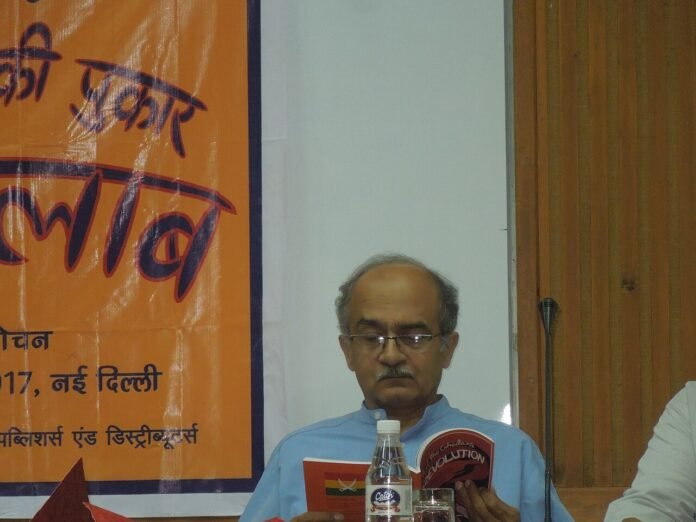
Archival photo: Sidheeq / Wikimedia Commons, CC BY-SA 4.0, July 26, 2017. This photograph does not show the October 2026 press conference. Resized for display; display crops remain under the same licence. Image and author · CC BY-SA 4.0.

The News Desk covers breaking news from India, Asia and the world. Stories are checked against at least two credible sources before publication.