November 2: Prime Minister Narendra Modi is scheduled to inaugurate Pune Metro’s Line 3 and lay foundation stones for Phase-II projects on November 3 at 12:30pm by video conference, according to the Prime Minister’s Office. The announced package totals around ₹21,800 crore. The event combines an inauguration and new construction commitments; it should not be read as a statement that every corridor in the package is already open for passengers.
Key highlights
- The Pink Line connects the Maan–Hinjewadi area with District Court and the Shivajinagar side of Pune.
- PMRDA identifies a 23.203km elevated corridor with 23 planned stations.
- The PMO puts Line 3’s cost above ₹8,300 crore and Phase-II’s estimate around ₹13,500 crore.
- Fares, first passenger departures and station-by-station availability require the operator’s current service notice.
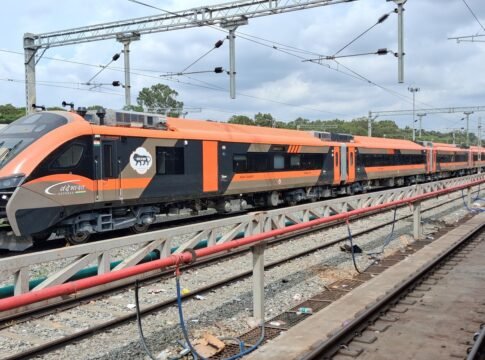
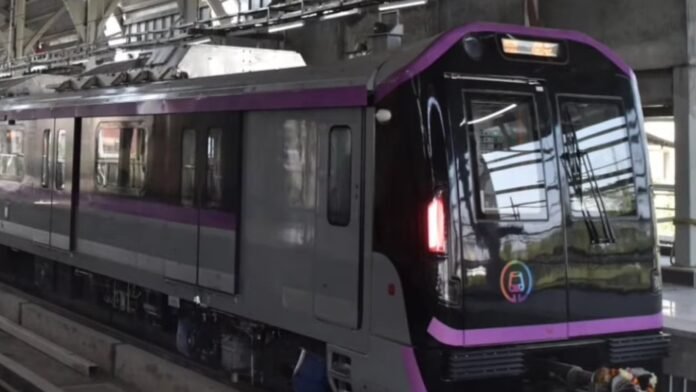
File photo: A Pune Metro train (March 10, 2022). Credit: Berlindian / Wikimedia Commons, CC BY-SA 4.0. Cropped and resized by The Press of Asia; adapted photograph licensed under CC BY-SA 4.0. Archival view from the existing Pune Metro system, not the new Pink Line train or the November 2026 inauguration.
What is scheduled for November 3
The PMO’s November 2 announcement separates the inauguration of Line 3, also called the Pink Line, from the foundation stone for Phase-II. It says the Pink Line will improve connectivity between the Hinjewadi IT hub and Shivajinagar and integrate with the existing metro network.
PMRDA’s project page gives the corridor’s length as 23.203km and lists 23 stations. The authority describes the project as a public-private partnership under a Design, Build, Finance, Operate and Transfer model. A special-purpose company, Pune IT City Metro Rail Limited, was established to implement it.
At a glance
| Project | Officially stated scope | Status in the November 3 programme |
|---|---|---|
| Line 3 / Pink Line | Approximately 23km, Maan to District Court | Inauguration scheduled |
| Phase-II Lines 2A and 2B | Around 12.75km combined | Foundation stone scheduled |
| Phase-II Line 4 | Around 25.52km, Kharadi to Khadakwasla | Foundation stone scheduled |
| Phase-II Line 4A | Around 6.12km, Nal Stop to Manik Baug | Foundation stone scheduled |
| Combined announced value | Around ₹21,800 crore | Includes projects at different stages |
How the cost figures fit together
PMRDA states a Line 3 project cost of ₹8,313 crore, including items such as land acquisition and utility shifting. The PMO describes the line as costing more than ₹8,300 crore and gives an estimated ₹13,500 crore for Phase-II. These are project values, not fares or the amount an individual commuter will pay.
Our calculation: ₹8,313 crore plus approximately ₹13,500 crore equals approximately ₹21,813 crore, consistent with the rounded description of an overall package around ₹21,800 crore. The figures have different precision, so the sum should not be presented as a new audited total.
A foundation-stone ceremony also does not mean the entire future project cost is spent on that day. Project approval, contracting, construction, testing and passenger operation are different stages. Reporting them separately provides a clearer picture of what the announcement changes immediately and what remains to be delivered.
What the Phase-II corridors are intended to add
The PMO identifies Line 2A as Vanaz–Chandani Chowk and Line 2B as Ramwadi–Vitthalwadi, with the two extensions spanning around 12.75km together. It lists Line 4 as Kharadi–Khadakwasla and Line 4A as Nal Stop–Manik Baug.
The announcement describes wider connections to residential, commercial and IT areas and integration with intercity buses and the existing metro. It identifies interchange facilities at Swargate, Nal Stop and Kharadi Bypass. These are the announced network plans; they are not a current route planner for travel across unfinished corridors.
Our calculation: the three published Phase-II length figures add to roughly 44.39km. That is a simple addition of the announcement’s rounded corridor lengths, rather than a separate engineering measurement or confirmation that all those kilometres are operational.
What commuters should check before the first trip
An inauguration date is an important milestone, but a journey requires more specific information: the first passenger service, the stations actually accepting passengers, operating hours, fares, ticketing arrangements and interchange access. Those details should be taken from the operator’s current notice.
A planned station count should not be treated as proof that every station is available from the first passenger day. Equally, a photograph of a train in an existing part of the Pune system cannot establish the status of a new corridor. The image used here is dated and identified as a file photograph of an earlier Pune Metro train.
For workers commuting to the Hinjewadi area, the complete journey also includes reaching a station and travelling from the destination station to the workplace. The usefulness of a metro connection depends on these access links, the service pattern and the time of travel, not only the line drawn on a map.
Women operators and the energy plan
The PMO says Line 3 will be operated entirely by women train operators. It also says approximately 30% of the line’s electricity requirement is envisaged to come from solar power. The second statement is an intended energy contribution, rather than a verified operating share measured after opening.
These details can be followed with practical evidence after services begin: staffing arrangements, actual service delivery and reported electricity use. Keeping the planned solar share distinct from achieved performance avoids turning an announcement into a result before the operating data exist.
What to watch
The immediate milestone is the November 3 programme at 12:30pm. After that, the most useful updates for readers will be the operator’s passenger-service notice and, separately, construction and delivery schedules for Phase-II.
The confirmed news is a scheduled Pink Line inauguration alongside the start of further project commitments. The opportunity is better connectivity across Pune, while the test for commuters will be the service they can actually use. This preview does not invent fares, train frequencies or an opening date for an unfinished extension.
Sources
- Prime Minister’s Office: November 3 Pune Metro inauguration and foundation-stone programme
- PMRDA: Pune Metro Line 3 project details

The National Desk covers India's politics, governance, security and public-interest news. Stories are checked against at least two credible sources before publication.