October 30: Singapore’s employment increased by 27,700 in the third quarter, while retrenchments rose to 4,800, the Ministry of Manpower said in today’s advance labour-market release. The preliminary figures show faster job creation alongside continued restructuring in parts of the economy.
Key highlights
- Employment growth excludes migrant domestic workers.
- Both resident and non-resident employment increased.
- The retrenchment rate remained at 2.0 per 1,000 employees.
- A fuller third-quarter report is expected in mid-December.
The quarter in one table
| MOM measure | Q2 2026 | Q3 2026 advance |
|---|---|---|
| Employment change | +11,400 | +27,700 |
| Retrenchments | 4,620 | 4,800 |
| Retrenchment incidence per 1,000 employees | 2.0 | 2.0 |
Overall unemployment was 2.0% in September, unchanged from August. Resident unemployment rose to 3.0% from 2.9%, while the citizen rate rose to 3.1% from 3.0%. Residents include citizens and permanent residents.
More employment can coexist with retrenchments
Employment change measures the net movement in the workforce over a period. Retrenchments identify one type of job separation. They are different measures, so a growing workforce can still include workers who lose their positions.
The headline employment increase should not be described as the total number of people hired. A net increase reflects additions and reductions across businesses. It also cannot show how easily a retrenched person finds another job, or whether the next position matches the previous role’s pay and skills.
MOM said non-residents accounted for the majority of employment growth, with construction and manufacturing contributing. Resident gains were supported by essential and public services, while outward-oriented sectors remained more subdued.
Why the layoff count rose but the incidence did not
Our calculation: the reported retrenchment count increased by 180, or about 3.9%, from the second quarter. The published incidence nevertheless remained at 2.0 per 1,000 employees.
A count and a rate use different frames. The rate relates retrenchments to the size of the employee population and is published at a specified level of rounding. A small change in the count therefore need not alter the displayed rate.
The useful next questions concern the workers affected and their subsequent outcomes. Industry detail, re-entry into employment and the availability of suitable vacancies would give more information than the aggregate count alone.
Hiring intentions offer an early signal
In September, 42.3% of surveyed firms intended to hire in the following three months, up from 30.5% in August. MOM also recorded an increase in firms expecting to raise wages, although both intentions measures remained below July levels.
An intention is a forward-looking survey response. It does not establish that a vacancy has been advertised or that an offer has been accepted. A jobseeker should use current vacancies and role requirements alongside this broad indicator.
Similarly, an employer’s intention to increase pay does not specify the size of the increase or which employees would receive it. The survey helps identify direction without replacing individual employment terms.
What to watch
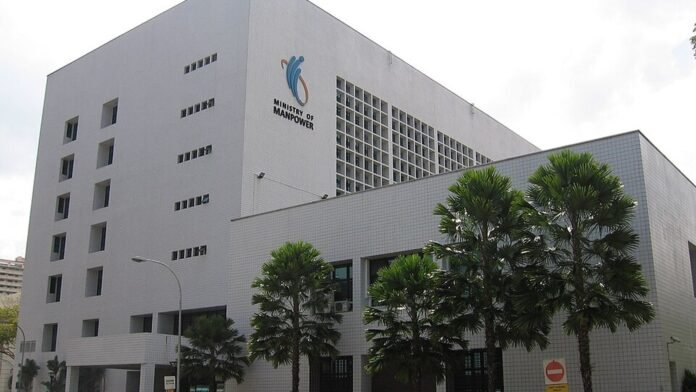
The fuller December report should add job-vacancy and detailed workforce information. Those figures will help distinguish broad hiring demand from shortages in particular occupations. The photograph is a dated archival view of the Ministry of Manpower building, rather than an image of this quarter’s hiring activity.
Sources

The Business Desk covers markets, the economy, companies and personal finance. Stories are checked against at least two credible sources before publication.