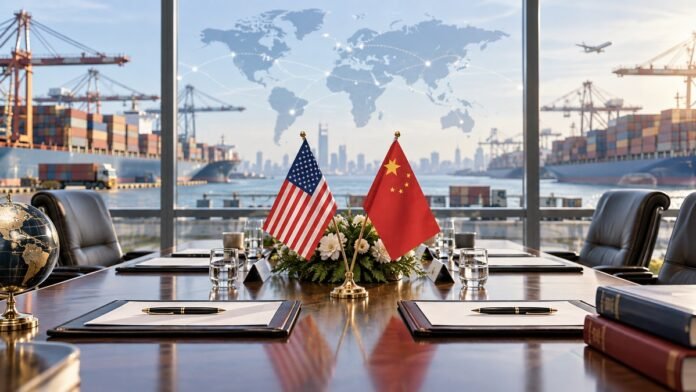
WASHINGTON, 24 September 2026: The United States and China have agreed to extend their trade truce by two months, moving the expiry date from November 10 to January 10, 2027. US Treasury Secretary Scott Bessent announced the extension after a second meeting in four days with Chinese Vice Premier He Lifeng.
The decision gives negotiators more time to explore a broader agreement as President Donald Trump hosts Chinese President Xi Jinping in Washington. It is a concrete economic development ahead of the leaders’ summit, but it is not yet a comprehensive trade settlement.
Key points
- The existing US-China trade truce now runs through January 10, 2027.
- The previous expiry date was November 10, 2026.
- Bessent and He met for about 90 minutes in Washington after longer talks in New York.
- Tariff reductions on about $30 billion of non-critical goods are among the measures under discussion.
- US officials say agricultural purchases and rare-earth deliveries remain implementation concerns.
What the extension does—and does not do
The truce preserves the current economic détente while both governments consider whether to continue the Busan arrangement or negotiate a larger package. It reduces the immediate risk that paused tariff and trade measures snap back in November.
It does not remove the wider disputes over technology controls, industrial policy, market access, critical minerals and agricultural trade. Nor does it guarantee that a broader agreement will be completed by January. Bessent said it was not yet clear whether negotiators could finish a larger deal within the new window.
Implementation remains the test
US officials say China is meeting a commitment to buy 25 million tonnes of soybeans but is behind on a separate pledge involving $17 billion of other agricultural products. They have also raised concerns about deliveries of rare-earth materials. Beijing has its own complaints about US tariffs and technology restrictions.
Those gaps matter because leader-level announcements can stabilise expectations, but businesses need customs rules, licences and purchase contracts that can be measured. A short extension buys time; it does not resolve enforcement questions.
Trade, AI and the summit agenda
The economic talks are taking place alongside discussions on artificial intelligence. US officials have proposed a notification mechanism for AI incidents with national-security implications. The Press of Asia previously explained the US-China AI incident-alert proposal, which remains a diplomatic initiative rather than a binding treaty.
Xi’s state visit was officially confirmed for September 23–25. Our earlier guide to the Trump-Xi visit separated confirmed travel details from speculative summit outcomes. The trade-truce extension is the first substantial confirmed economic result associated with the current round of meetings.
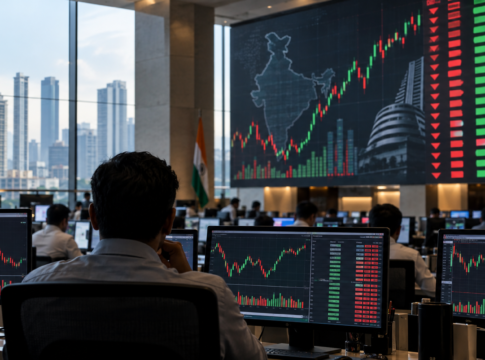
Why Asian markets and India are watching
A sudden return to higher tariffs could disrupt Asian manufacturing networks, shipping demand and commodity flows. The extension therefore lowers near-term uncertainty for exporters, although it may only postpone harder decisions.
For India, the effects are mixed. Stable US-China trade can support global demand and calmer financial markets. At the same time, changes in tariff treatment, semiconductor controls or supply-chain strategy can influence investment decisions that might otherwise shift toward India. The practical impact will depend on the final product list and any technology or critical-mineral measures.
What businesses should watch
Companies should focus on the published legal measures rather than political headlines alone. Customs notices will show which tariff suspensions remain in force, while export-licence decisions will reveal whether critical technology restrictions have changed. Commodity traders will also monitor actual soybean cargoes and rare-earth shipments because delivery data can expose a gap between announced commitments and implementation.
For manufacturers with suppliers in both countries, the extension offers a short planning window but not long-term certainty. Inventory, freight and investment decisions extending beyond January still face policy risk. A durable agreement would need clear product coverage, dates and a process for resolving disputes.
What happens next
Investors will look for official readouts after the Trump-Xi summit, including any tariff schedule, agricultural purchase commitment or mechanism for monitoring compliance. Until those details are published, the two-month extension should be read as a pause that keeps negotiations alive—not proof that the trade conflict has ended.
Sources / References
- Reuters report on the two-month extension, 23–24 September 2026
- RTHK report carrying Bessent’s January 10 date, 24 September 2026
- Associated Press background on Trump-Xi trade and AI talks

The Business Desk covers markets, the economy, companies and personal finance. Stories are checked against at least two credible sources before publication.