October 30: The fifth plenary session of the Communist Party of China’s 20th Central Committee closed in Beijing on October 29 after adopting a resolution on Party governance. Its communiqué sets the 21st Party National Congress for Beijing in the second half of 2027, without announcing an exact opening date.
Key highlights
- The plenary session ran from October 26 to October 29.
- Xi Jinping addressed the meeting, which the Political Bureau presided over.
- Zhang Shengmin was elected a Political Bureau member.
- The congress timetable specifies a half-year window, rather than a day.
The main decisions in the communiqué
| Item | Published position |
|---|---|
| Meeting | Fifth plenum of the 20th CPC Central Committee |
| Resolution | Full and rigorous Party self-governance |
| Next Party congress | Beijing, second half of 2027 |
| Political Bureau election | Zhang Shengmin |
| Central Committee vacancies | Ten alternate members elevated |
The communiqué records attendance by 162 Central Committee members and 117 alternate members, alongside other participants. Its governance themes include discipline, supervision, personnel management and institutional arrangements.
What the governance resolution concerns
The adopted resolution addresses the Party’s own governance framework. The communiqué presents stronger oversight and discipline as priorities and describes the leadership’s assessment of its work.
Those statements need to retain their institutional attribution. A ruling party’s assessment of its performance is a published political position; it is not, on its own, an independently measured outcome. Evaluating implementation would require subsequent rules, records of action and evidence about their effects.
The distinction is especially important when political documents use broad statements of progress. Readers can identify what the meeting approved without treating every self-assessment as a separately established fact.
What the congress timetable establishes
The second-half-of-2027 window is a concrete scheduling decision, but it is not an exact date. It also does not announce the complete agenda, a full list of delegates or the outcome of future personnel decisions.
For readers tracking China’s political calendar, the useful next milestones are the publication of those specific arrangements. An announced meeting window should not be expanded into a claim that future decisions have already been settled.
The communiqué’s recorded election and changes to Central Committee membership are decisions of this meeting. They should be distinguished from speculation about the next congress.
Economic language and concrete policy measures
The document also calls for support to domestic demand, innovation, reform and opening-up. These are stated policy directions, rather than a new statistical release or a complete package of spending and regulatory measures.
Businesses assessing the implications would need the follow-through: which authority issues an implementing document, what activity it covers, its effective date and any financial or compliance terms. A broad political direction provides context for that process but does not replace those details.
This is relevant across Asia because firms following China’s policy environment often need to separate strategic language from operational requirements. The document’s title, issuing body and date help keep those layers of the record clear.
What to watch
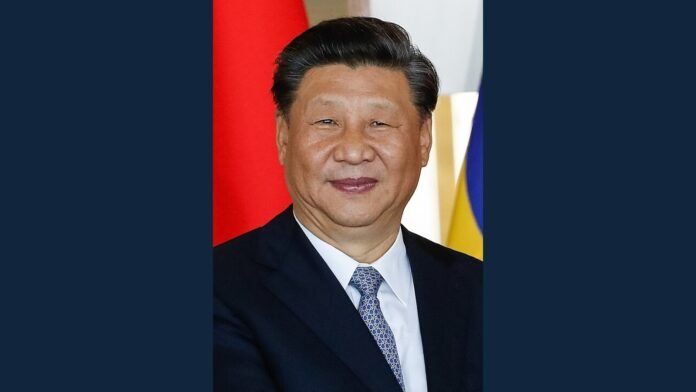
Publication of the full resolution, implementing arrangements and further congress notices will make the next steps more specific. The confirmed development is the close of the plenum and the decisions in its communiqué. The photograph shows Xi in Brasília in November 2019; it is not a photograph of the October 2026 session.
Sources

The International Desk covers world and Asian affairs, diplomacy and conflict, with a focus on what they mean for India. Stories are checked against at least two credible sources before publication.