November 2: Hong Kong’s visa-free stay for qualifying APEC Business Travel Card holders has increased from 60 to 90 days from November 1. The Immigration Department’s October 30 announcement says cardholders must already have obtained Hong Kong pre-clearance to use the arrangement. The change gives eligible short-term business travellers more time, but it is not a general extension of tourist admission for everyone visiting the city.
Key highlights
- The maximum eligible stay increased by 30 days from November 1.
- A valid ABTC does not remove the Hong Kong pre-clearance requirement.
- Mainland China is implementing its corresponding extension on the same date.
- Other participating economies set their own implementation timelines.
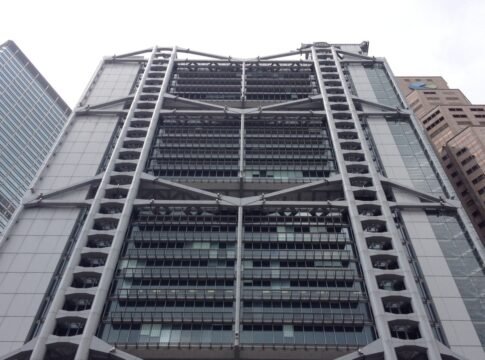
File photo: Hong Kong’s skyline (August 2004). Credit: Airunp / Wikimedia Commons, CC BY-SA 2.1 Spain. Cropped and resized by The Press of Asia. Archival city photograph, not a current immigration queue or a photograph of ABTC holders. This adaptation is shared under the same licence.
What the Hong Kong announcement says
The government said Hong Kong was aligning its implementation with mainland China. It also identified Indonesia, the Philippines and Singapore among five economies moving towards a 90-day maximum stay under the scheme. Crucially, the notice said each economy would determine its own start date. Hong Kong’s November 1 implementation should not be copied automatically into travel advice for the other three.
The announcement concerns the APEC Business Travel Card scheme, commonly shortened to ABTC. APEC describes the card as a way to streamline short-term business travel, with a single application supporting pre-clearance requests to participating economies. The benefit applies where the destination has granted the relevant pre-clearance.
At a glance
| Item | Confirmed detail | Why it matters |
|---|---|---|
| Hong Kong implementation | November 1, 2026 | The extension is already effective |
| Maximum eligible stay | 90 days, previously 60 | An additional 30 days |
| Essential condition | Hong Kong pre-clearance | Holding a card alone is insufficient |
| Other economies | Separate implementation timelines | Check each stop on a regional itinerary |
Who can use the longer stay
The first question is whether the traveller holds a valid card and has Hong Kong pre-clearance. A person travelling under a different visa or visitor arrangement should use the conditions attached to that arrangement. A headline about 90-day ABTC stays cannot be treated as evidence that an unrelated visitor category has changed.
The second question is the purpose of the visit. APEC’s scheme is for short-term business travel. The longer stay should not be read as a new work permit, a right to take local employment or a route to permanent residence. Readers considering those activities need the immigration category appropriate to their plans.
The third question is what the traveller’s own card and entry conditions actually permit. Pre-clearance, card validity and passport details should be checked before booking. An extension in the scheme’s maximum period does not make it sensible to ignore the admission terms recorded for an individual journey.
How the wider APEC scheme works
APEC’s guidance says successful applicants from fully participating economies receive a five-year card, with entry authority for short business stays in economies that have granted pre-clearance. The guidance describes stays of up to 60 or 90 days, depending on the destination’s arrangements. The length of card validity and the length of each permitted visit are therefore separate concepts.
Canada and the United States are transitional members. APEC says they provide expedited immigration processing at major international airports but do not offer the same reciprocal entry arrangements. Travellers should not infer visa-free US or Canadian entry simply from holding an ABTC.
Hong Kong’s release listed 19 participating economies in the scheme’s relevant framework. For a multi-stop itinerary, it is important to check each destination separately. A single business trip can involve different maximum stays and different immigration requirements at successive borders.
What the extra month changes for businesses
Our calculation: moving from 60 to 90 days adds 30 days, a 50% increase in the maximum period. That arithmetic describes the allowance, not a forecast of how much business travel or spending will rise. It also does not mean visitors should automatically stay for the full period.
For an eligible traveller, the additional time may make a longer sequence of meetings, negotiations or trade events easier to plan within one visit. For a company, the practical benefit depends on whether the staff member qualifies and whether the planned activities are permitted under the short-term business arrangement.
What to watch
Businesses arranging regional travel should monitor the destination-specific notices for Indonesia, the Philippines and Singapore rather than assume a common launch date. They should also keep card renewals and passport validity under review, particularly when an itinerary extends well beyond the first entry date.
The immediate Hong Kong change is straightforward: qualifying, pre-cleared ABTC holders can use a longer visa-free business stay from November 1. The useful next step is a document and eligibility check, not an assumption that all visitors now have a new 90-day entitlement.
Sources
- Hong Kong Information Services Department: APEC card visa-free stay extended
- APEC: Business Travel Card and virtual ABTC guidance
- Hong Kong Immigration Department: APEC Business Travel Card scheme

The Business Desk covers markets, the economy, companies and personal finance. Stories are checked against at least two credible sources before publication.