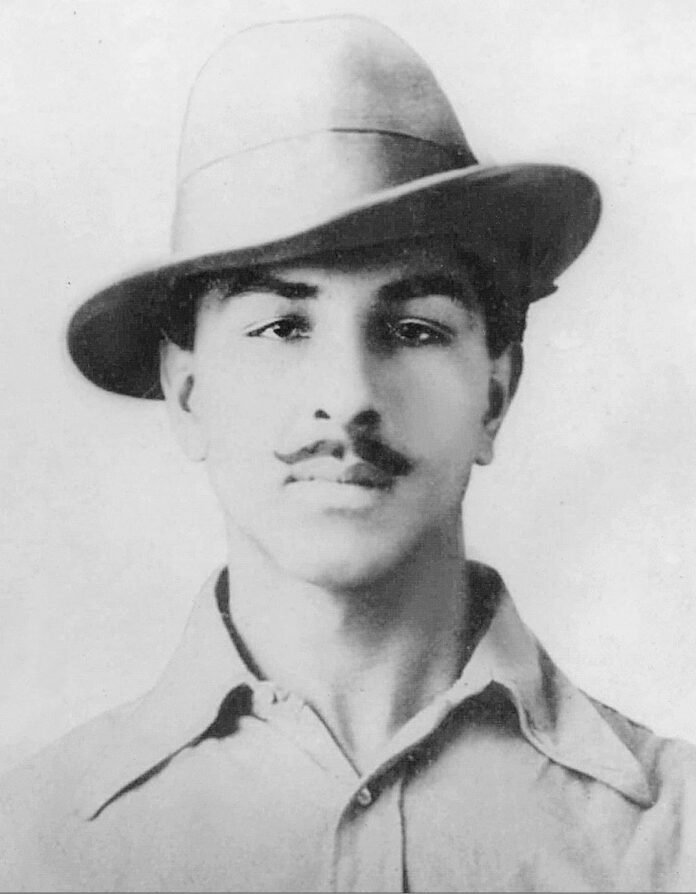
New Delhi, September 28: India today marks the 119th birth anniversary of Shaheed-e-Azam Bhagat Singh. Punjab’s 2026 holiday calendar lists September 28 as a holiday for Bhagat Singh Jayanti, and schools and educational institutions in the state are closed. Hanged at just 23, Bhagat Singh remains an example to young people not only of courage but also of independent thought and reason.
Key highlights
- Birth: 1907, in Banga village of Lyallpur district (now in Pakistan). His birth anniversary is marked on September 28, though some sources give September 27.
- Ancestral village: Khatkar Kalan, Punjab.
- Assembly bombing: on April 8, 1929, with Batukeshwar Dutt, he threw low-intensity bombs in the Central Legislative Assembly and courted arrest.
- Execution: on March 23, 1931, in Lahore jail, with Sukhdev and Rajguru; he was 23.
- Ideas: the slogan “Inquilab Zindabad” and the essay “Why I Am an Atheist”, written in jail.
Childhood and the first steps towards revolution
Bhagat Singh was born to Sardar Kishan Singh and Vidyavati. The family was already part of the freedom struggle; his uncles Ajit Singh and Swaran Singh had a deep influence on him. The 1919 Jallianwala Bagh massacre shook the teenage Bhagat Singh. He studied at the DAV School in Lahore and at the National College founded by Lala Lajpat Rai, where he was introduced to revolutionary ideas.
He later joined the Hindustan Republican Association (HRA) and played a key role in turning it into the Hindustan Socialist Republican Association (HSRA). Adding “Socialist” to the name signalled that he wanted not just to remove the British, but to build an equal society.
Key dates in his life
| Date | Event |
|---|---|
| 1907 | Born in Banga village, Lyallpur district (now in Pakistan) |
| April 13, 1919 | Jallianwala Bagh massacre, which deeply affected him |
| December 17, 1928 | British police officer John Saunders shot in Lahore, after Lala Lajpat Rai’s death |
| April 8, 1929 | Bombs thrown in the Central Legislative Assembly with Batukeshwar Dutt; arrest courted |
| 1929 | Long hunger strike in jail; comrade Jatin Das dies after 63 days in September |
| 1930 | Writes “Why I Am an Atheist” in jail |
| March 23, 1931 | Hanged in Lahore jail with Sukhdev and Rajguru, aged 23 |
The Saunders killing and the bombs in the Assembly
In 1928, Lala Lajpat Rai died after being injured in a lathi charge during a protest against the Simon Commission. To avenge this, British police officer John Saunders was shot in Lahore on December 17, 1928. The actual target was police superintendent James Scott, but there was a case of mistaken identity.
On April 8, 1929, Bhagat Singh and Batukeshwar Dutt threw bombs in the Central Legislative Assembly in Delhi that were not meant to kill anyone. They threw leaflets and, instead of running away, courted arrest so that they could use the court as a platform for their views. The leaflets said that it is easy to kill individuals, but ideas cannot be killed.
Jail, hunger strike and the gallows
In jail, Bhagat Singh went on a long hunger strike demanding better treatment for political prisoners. During this struggle, his comrade Jatin Das died in September 1929 after a 63-day hunger strike. Bhagat Singh ended his own hunger strike in October 1929, after about 116 days.
In the Lahore Conspiracy Case, a special tribunal sentenced Bhagat Singh, Sukhdev and Rajguru to death. On March 23, 1931, the three were hanged in Lahore jail about 11 hours before the scheduled time, and their bodies were quietly cremated at Hussainiwala. Bhagat Singh was just 23.
Ideas that still matter
Bhagat Singh is often remembered only as a brave revolutionary, but he was also a deep reader and thinker. His essay “Why I Am an Atheist”, written in jail in 1930, is regarded as an example of thinking based on reason and logic. He stood for socialism, equality, secularism and social justice, and the slogan “Inquilab Zindabad” became immortal with him.
What is happening today
- September 28 is a state holiday in Punjab; government and private schools are closed. Parents of CBSE, ICSE and IB schools should confirm with their school.
- Tribute events are being held across the country; special tributes are usually held on this day at his ancestral village, Khatkar Kalan in Punjab.
- This period also marks 10 years since the 2016 surgical strikes, which the Prime Minister mentioned on Sunday in Mann Ki Baat.
What it means
Perhaps his biggest lesson for young people today is that patriotism is not only a feeling, but also means reading, asking questions and standing up against injustice with careful thought. He used the courts and newspapers to put across his ideas; in other words, he trusted the power of ideas more than weapons.
This article was first published in Hindi and has been translated. The Press of Asia now publishes in English only.
Sources
- Vajiram & Ravi: Bhagat Singh Birth Anniversary 2026
- Wikipedia: Bhagat Singh
- The Sunday Guardian: Punjab school holiday, September 28, 2026

The History Desk tells the stories behind the news: the people, events and turning points of India, Asia and the world, with timelines and original sources. Stories are checked against at least two credible sources before publication.