October 15: NASA researchers have tested prototype solid-state batteries that could eventually support equipment on the Moon, reporting operation at temperatures down to minus 80°C with reduced performance.
What SPEARS achieved
In an October 14 research update, NASA said small cells in its SPEARS project operated well between minus 60°C and 80°C during thermal-vacuum testing at Langley Research Center. Performance declined at minus 80°C.
The prototypes replace liquid electrolytes with solid ceramic or polymer materials. NASA also reported no damage after exposure to temperatures ranging from minus 170°C to 100°C.
Surviving cold is not the same as working in it
The agency explicitly says the cells do not operate at minus 170°C. Small heaters would be needed to bring them back to an operating temperature. The project targets possible uses in rovers, tools, scientific instruments and astronaut emergency equipment.
SPEARS began in 2026. NASA Ames is developing test boards and electronics to help prepare the technology for spaceflight.
Why this result needs careful reading
The important distinction is between a battery continuing to deliver power and a battery surviving storage in extreme cold. Those are separate engineering requirements, and a successful test of one does not establish the other.
For a future lunar system, the practical questions include how much heating is needed, how repeated cycles affect capacity and how the complete power system performs with its electronics and enclosure.
The announcement is a research milestone, not a claim that a finished battery has already powered a mission on the lunar surface.
Sources and image credit
Official source (checked October 15, 2026).
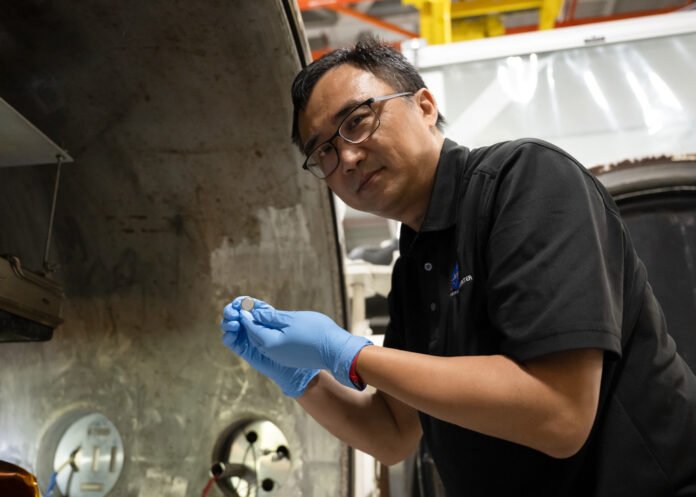
Yi Lin holds a SPEARS coin-cell battery after thermal-vacuum testing at NASA Langley. Photo: NASA/Ryan Hill, published October 14, 2026. Used for editorial reporting under NASA media guidelines; no endorsement implied. Photo source · Image reuse terms

The Tech Desk covers technology, artificial intelligence and cybersecurity. Stories are checked against at least two credible sources before publication.